
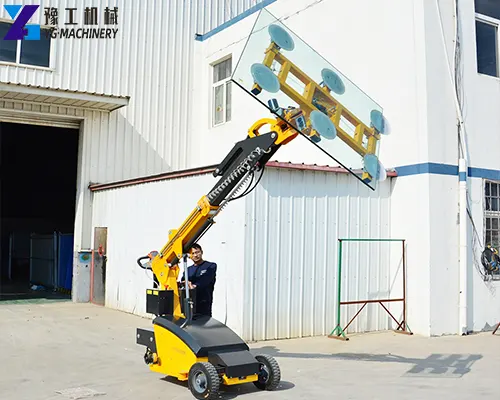
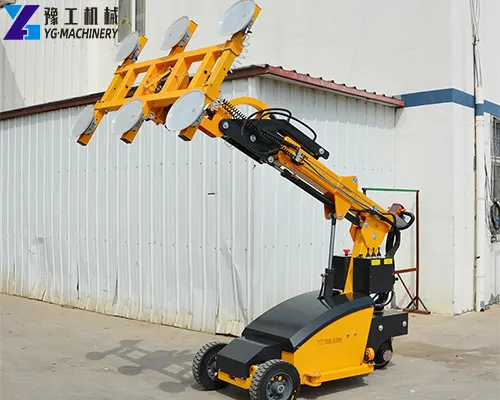
Having exported construction equipment for over a decade, I’ve noticed a fascinating phenomenon: many customers, before deciding to buy a glass glazing robot, read dozens of reviews and watch dozens of videos. Ultimately, what truly holds them back are often seemingly minor questions they’re hesitant to ask.
For example: Will the suction cups suddenly fall off? Can it really not be used in the rain? Is it big enough for my construction site entrance? How many years can this machine be used?
These questions aren’t mentioned on product pages or in sales pitches, but they are precisely the most genuine concerns in customers’ minds. Today, we’ve compiled the 10 most frequently asked questions from global customers over the past two years and will answer them one by one in plain language, helping you clarify all your doubts before placing an order.
If you’re currently researching glazing robots, or your company is considering implementing automation equipment, this article is worth your 5-minute read.
Question 1: Will the Suction Cups Suddenly Fall Off? Who Is Responsible if the Glass Breaks?
This is definitely the most frequently asked question, bar none. After all, a large piece of curtain wall glass can cost tens or even hundreds of thousands of yuan; if it falls, the loss is substantial.
To be honest: the risk of suction cup failure does exist, but reliable equipment uses multiple design features to reduce this risk to almost zero.
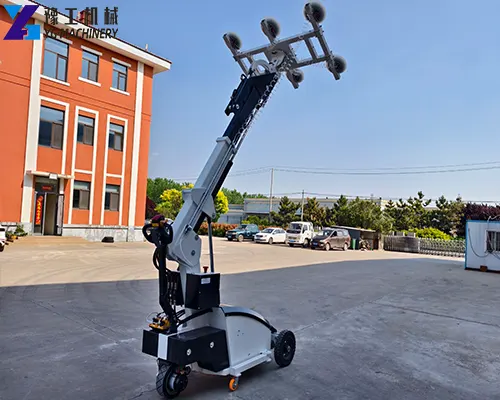
Take YG’s glass glazing robot as an example; its safety protection has a “three-layer insurance” structure:
- First layer: Dual-loop independent vacuum system. The suction cups are divided into two groups, each connected to two independent vacuum pumps and vacuum tanks. Even if one pump fails, the other loop can independently maintain full suction—note: full, not half. This is the most basic requirement in industry safety standards, but not every manufacturer actually achieves it.
- Second layer: Vacuum storage tank + power failure pressure maintenance. Even in the event of a sudden power outage, the vacuum in the storage tank can maintain glass adhesion for at least 30 minutes, enough time for workers to handle the situation calmly. Some cheaper models lack an air tank; the suction cups start leaking air within seconds of a power outage, which is truly dangerous.
- The third layer: Audible and visual alarms + real-time vacuum pressure display. The machine immediately alarms when the vacuum level drops to the warning threshold, and the remote control will also display a simultaneous notification. This gives the operator ample reaction time.
As for “who’s responsible if it breaks”—reputable manufacturers purchase product liability insurance, and the warranty coverage is clearly stated in the contract. This is on the premise that you use it according to the operating manual. Damage caused by overloading, using the wrong suction cup, or using it on unsuitable glass surfaces—such human-caused damage—will not be compensated by any brand.
Question 2: What Load Capacity Model Should I Choose? Buying Too Big Is Wasteful, Buying Too Small Is Insufficient.
This is the second most frequently asked question. Many customers ask with their glass dimensions and weight, worried that choosing a model that’s too small won’t work, or that choosing a model that’s too big will cost more.
Here’s a simple selection formula:
Recommended load capacity = Actual glass weight × 1.5 (safety factor)
And remember this principle: Choosing one level higher is always more reliable than choosing one level lower.
Why? Because Many Customers Only Calculate the Weight of the Glass Itself, Ignoring Several Practical Factors:
- Glass may have weight tolerances at the factory; thicker versions of insulated glass will be heavier than the nominal weight.
- The load capacity decreases when the arm is extended (usually about 50% of the retracted state).
- You might receive larger projects in the future, and buying a model that’s too small won’t be sufficient.
For example: If your project’s largest glass is 250kg, with a safety factor of 1.5, you need a load capacity of 375kg. Don’t buy a 300kg unit at this point; go straight for a 500kg model (like the YG-LD-500). The price difference isn’t significant, but it provides peace of mind, and you won’t need to replace the equipment for larger projects later.
Another easily overlooked point is the number and distribution of suction cups. For the same 500kg load, six suction cups are safer than four because each suction cup bears a smaller weight; even if one leaks, the impact is much smaller.
Question 3: How Much Money Can Glass Installation Robots Actually Save? How Long Does It Take to Break Even?
This is the question most business owners are concerned about. We’ll look at the real data, no exaggeration.
For a medium-sized curtain wall installation team, for example, traditionally, manually installing a standard 1.5m x 3m insulated glass pane (approximately 200kg) requires:
- 5-6 skilled workers + 1 crane
- Each pane takes approximately 40-60 minutes to install
- Labor costs (including insurance and benefits) are approximately $45-60/hour/person
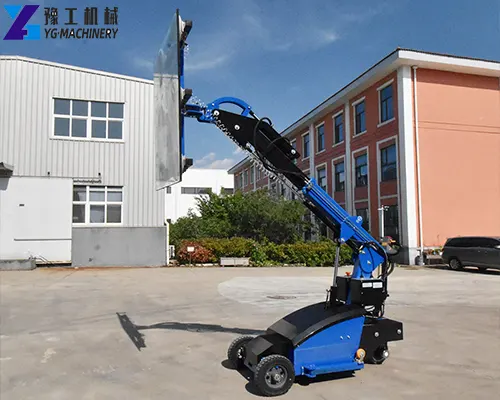
With glass installation robots:
- 2 workers are enough (1 to operate the robot, 1 to assist with alignment)
- Each pane takes approximately 15-20 minutes to install
- Efficiency increases by 120%-150%
A 600kg glass glazing robot costs approximately $12,000-$18,000. Including maintenance and spare parts, the annual operating cost is approximately $500-$1,000. In other words, the cost of the equipment can be recouped in 1-2 months just from labor costs alone.
A client in Chicago, USA, who manufactures commercial facades, bought one of our YG-LD-800 units in March 2025. Previously, it took eight people a whole day to install an 800kg pane of glass; now, three people can do it in half a day. He calculated that he broke even in just one month—and that doesn’t even include the money he earned from two additional projects due to the increased efficiency.
Question 4: What if It Rains or Is Windy During Outdoor Construction? What Are the Weather Restrictions?
Many people think that glass installation robots are “all-weather,” but that’s not true. Like manual labor, they also have weather limitations.
- Wind Speed Limitations: Generally, it’s not recommended to use them outdoors when the wind speed exceeds level 6 (approximately 40-50 km/h). It’s not that the suction cups will fall off—the suction power is more than enough—but the windward surface of the glass itself is too large, causing it to sway in the wind, affecting installation accuracy and safety. Professional equipment has electronic tilt and wind speed monitoring; it will automatically alarm if the threshold is exceeded.
- Rainfall Limitations: Light rain is fine, but outdoor work is not recommended in moderate to heavy rain. There are two reasons: first, the glass surface is too wet, and a water film may form between the suction cup’s sealing gasket and the glass, affecting the vacuum; second, the construction site is slippery in rainy weather, posing a safety hazard to the robot’s movement. Indoor work is completely unaffected by weather.
- Temperature Limitations: YG’s equipment is designed to operate in temperatures from -10℃ to 45℃, covering the construction conditions in most areas. For extremely cold regions (such as Northern Europe and Russia in winter), a low-temperature version of the battery and hydraulic fluid can be installed, allowing operation even at -20 degrees Celsius.
A client in Warsaw, Poland, was working on an interior renovation project for a shopping mall at the end of 2024. In winter, temperatures dropped several degrees below zero, and the robots operated normally indoors without any issues. However, the outdoor work was delayed by a week due to continuous snowfall—this wasn’t a problem with the robots, but rather a requirement of construction safety regulations, which meant manual labor was also unable to complete the work.
Question 5: How Long Do Suction Cup Pads Last? How Do I Know When to Replace Them?
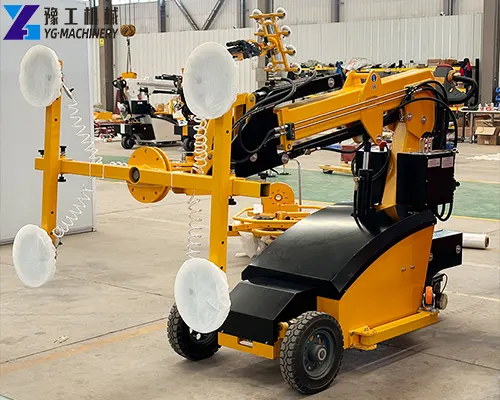
Suction cup pads are consumables, like car tires; they age and need replacing. However, many customers don’t know when to replace them, either wasting money by replacing them too early or posing safety hazards by replacing them too late.
Under normal use, a set of silicone suction cups lasts approximately 6-12 months, depending on:
- Frequency of use: Daily or occasional use.
- Glass surface cleanliness: Dusty surfaces and construction sites with cement residue wear out faster.
- Storage method: Stored after use or left out in the sun and rain.
How to determine when to replace the suction cup? Here are three simple methods:
- Check the appearance: Replace immediately if the suction cup surface shows cracks, hardening, deformation, or chipped edges.
- Test the vacuum: With the same glass and the same pump, if the vacuum level drops significantly (e.g., from -0.08 MPa to -0.06 MPa), it indicates a poor seal in the suction cup.
- Regular inspection: It is recommended to inspect the suction cups monthly, running your hand around them to check for hardening or damage. In harsh construction environments, the inspection frequency should be increased.
Suction cups are inexpensive; don’t skimp on this. They are critical components that directly contact the glass; replace them when necessary. Safety is always the top priority.
Question 6: My Construction Site Has Narrow Entrances and Limited Space, Can the Machine Get In?
This is a question frequently asked by clients involved in interior renovation projects. For example, in shopping mall renovations and office building remodeling, there are door frames at the entrance, and elevators have size restrictions, making it impossible for large equipment to fit.
The good news is that most modern glass installation robots feature narrow-body designs. YG’s standard wheeled model has a chassis width of only 810mm. To put that into perspective, a standard doorway is typically 900mm wide, making it easy to pass through. With an 810mm body, it can also fit into most passenger elevators.
For particularly narrow spaces, such as a passageway only 700mm wide, a combination of a spider crane and glass suction cups is available. The spider crane, when folded, is only 600mm wide at its narrowest point, allowing it to squeeze through very narrow areas and then unfold at the work site.
The Warsaw shopping center project was an example of this. The client needed to replace glass in the mall’s atrium, and all equipment had to be brought in via a freight elevator, where the narrowest point of the passageway was only 750mm. Our YG-LD-500, when folded, is 810mm wide, just a little too narrow to pass. We ultimately recommended a 1-ton spider crane with glass suction cups to the client. With the spider crane folded, it was only 710mm wide, allowing it to pass smoothly. Once deployed on-site, it performed just as well.
Therefore, when choosing equipment, don’t just look at the load capacity and height; always measure the narrowest point on your construction site first. Many people overlook this parameter and only realize they can’t get in when they arrive on site.
Question 8: How Many Years Can a Glass Glazing Robot Last? Is Maintenance Expensive?
This is a very practical question. Nobody wants it to break down after only two or three years.
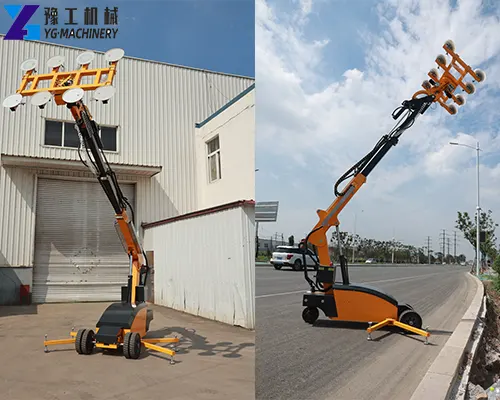
With normal use and timely maintenance, a glass glazing robot can easily last 8-10 years. The core components (hydraulic system, chassis structure, vacuum system) are industrial-grade designs with a long lifespan. The parts that really need regular replacement are consumables:
- Suction cup pads: Replace every 6-12 months.
- Hydraulic oil: Replace every 2 years; cost is low.
- Battery: Replace every 3-5 years (depending on usage frequency).
- Filters, seals: Regularly inspect and replace.
In total, the annual maintenance cost is about 3%-5% of the equipment price, much cheaper than employing a worker.
The key factor affecting lifespan is actually maintenance. Just like a car, if you change the oil and maintain it regularly, it can last for over ten years; if you never maintain it, it might break down in three to five years. We have an Australian customer who bought his first machine in 2017, and it’s still in use on construction sites today because he takes excellent care of it—he wipes it clean every day after use, checks the suction cups monthly, and changes the hydraulic oil annually.
Question 9: What if I Break Down While I’m Overseas? Who Can I Contact for After-Sales Service?
This is one of the biggest concerns for overseas customers. Since the equipment is located abroad, if it breaks down, the domestic manufacturer is often unable to provide timely assistance. Delayed repairs could disrupt the project schedule, resulting in losses potentially greater than the equipment itself.
YG’s approach is a triple after-sales guarantee:
- First: 24/7 online technical support. You can reach someone anytime via WeChat, WhatsApp, or email. Most minor issues (such as incorrect parameter settings or unfamiliarity with operation) can be resolved remotely via video call, eliminating the need for on-site visits. One of our Saudi customers messaged us at 2 AM saying their equipment was alarming. An engineer provided online guidance for 15 minutes and found it was just a clogged filter. Cleaning it resolved the issue, without delaying the next day’s project schedule.
- Second: Spare parts first. When purchasing equipment, we recommend a set of commonly used spare parts (sealing rings, filters, fuses, remote control batteries, etc.) based on the customer’s project requirements, ensuring the customer has them in stock locally. Small parts can be replaced independently without waiting for international shipping.
- Third: We support on-site installation and repair by our engineers. They are all highly professional engineers.
Here’s a word of caution: when buying equipment, don’t just look at the price; always ask about after-sales service. Some brands offer very low prices, but when you ask about after-sales support, there’s nothing—if it breaks, they’ll make you disassemble it and send it back for repair yourself, incurring huge shipping costs and taking up a lot of time and effort.
Question 10: Is It More Cost-Effective to Buy or Rent a Glass Installation Robot?
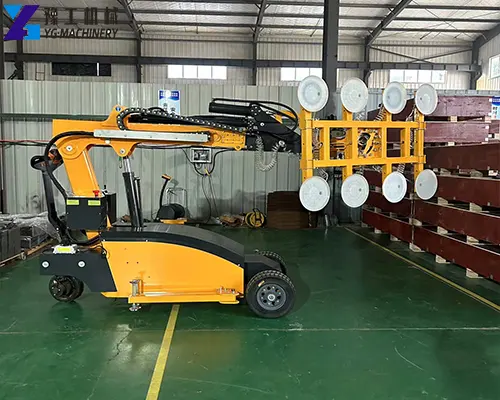
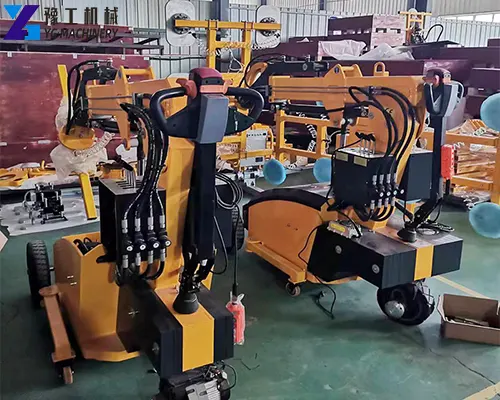
Final question: Many clients, when first contacting us, are unsure if their project volume can support a single machine and hesitate between buying and renting.
Simple judgment criteria:
If you meet the following criteria, we recommend buying:
- You have glass installation work throughout the year, not just occasional projects.
- Your annual installation volume exceeds 500 pieces of glass.
- Your business volume is expected to grow in the next 2-3 years.
- Your company has stable cash flow.
If you meet the following criteria, you can consider renting:
- You only need it for one large project, and may not need it afterward.
- You need to increase equipment during short-term peak periods, but don’t need it at other times.
- You want to test the effect first before deciding whether to buy.
But frankly, for professional companies specializing in curtain walls and glass installation, our advice is always to buy. The reasons are simple:
- Rental fees are expensive; the cost of renting is almost enough to buy half a machine.
- Owning your own equipment is convenient; you can start projects immediately without waiting for the rental company to send equipment.
- Equipment has a lifespan of 8-10 years, resulting in low annual costs.
- With equipment, you can take on larger projects that you couldn’t handle before, allowing your business to grow.
Of course, ultimately, it depends on your specific circumstances. If you’re unsure, tell us about your project situation, and we’ll help you calculate the costs and benefits to see whether buying or renting is more suitable.
YG Machinery – Glass Glazing Robot Manufacturer
These are the 10 most frequently asked and most practical questions from global clients over the past two years.
Glass assembly robots aren’t some mysterious black technology; they’re simply tools that can help you save money, improve efficiency, and reduce safety risks. However, the difference between choosing the right tool and using it effectively is significant. Hopefully, this article will help you consider all the necessary factors before making a decision and selecting the equipment that truly suits your needs.
If you have any other questions that you haven’t found answers to in this article, or if you’d like us to help you with specific selection and pricing, please feel free to contact us:
📞 WhatsApp / WeChat / Phone: +86 136 1385 6800
📧 Email: admin@yugongmachinery.com
Free project solutions and equipment selection advice provided.
