Top, Professional and Reliable Manufacturer of Various Machinery – YG Machinery
Glass Lift Robot
efficient glass lifting equipment
glazing robots for sale
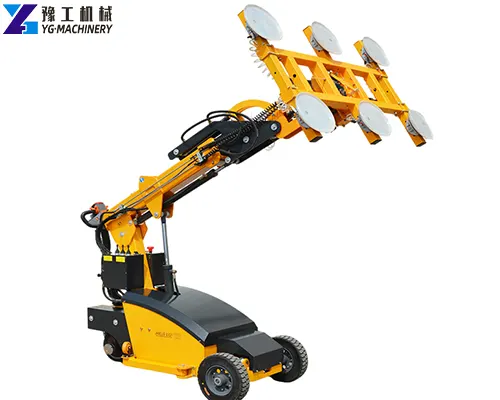
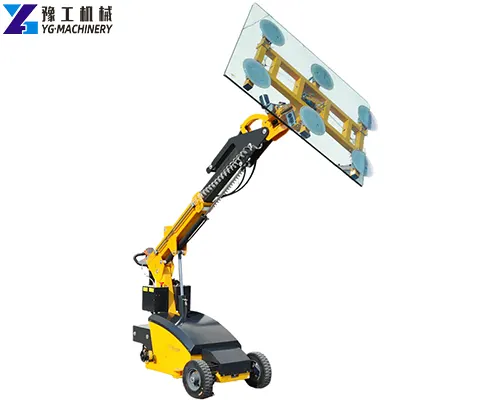
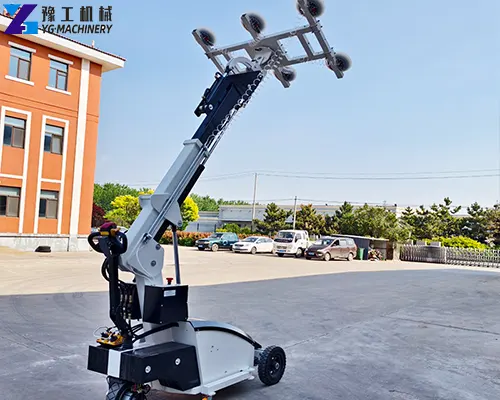
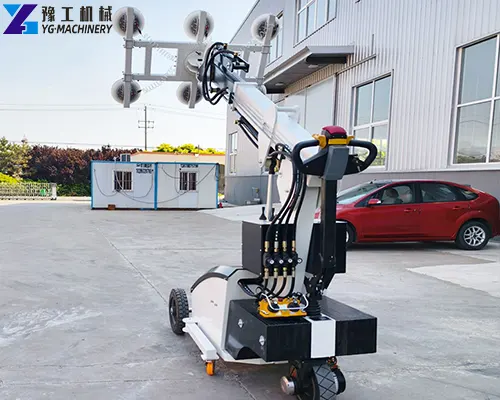
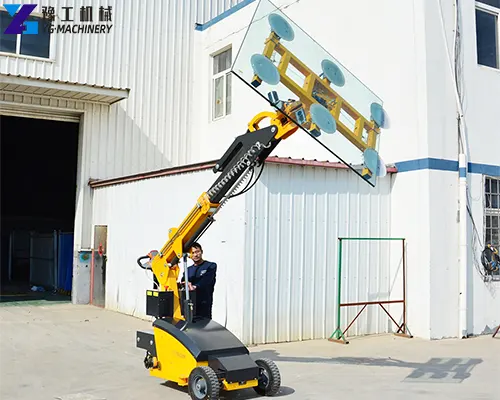
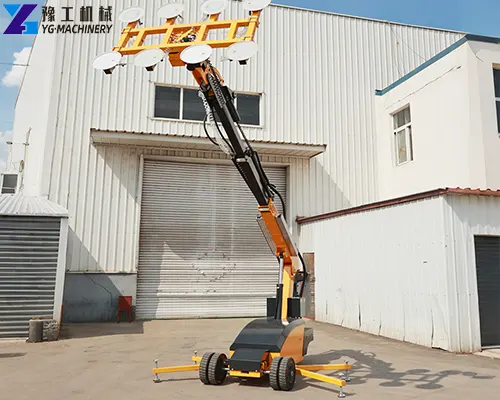
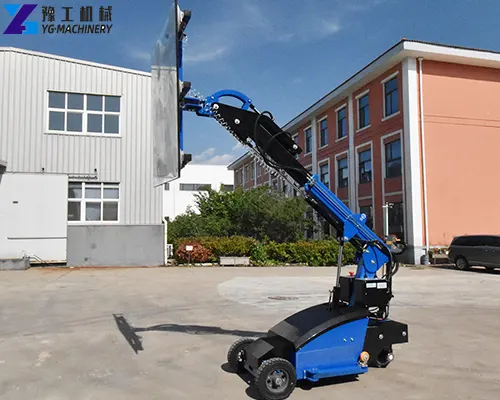
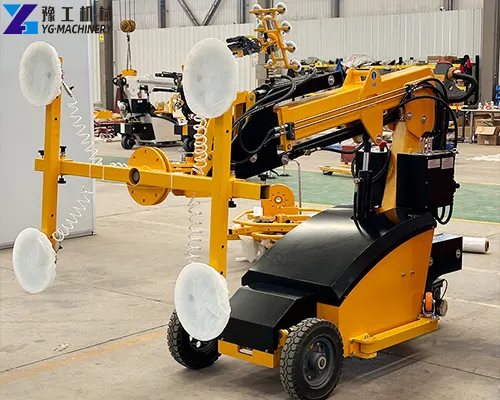
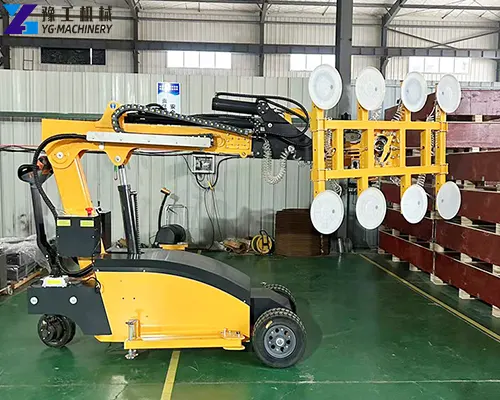
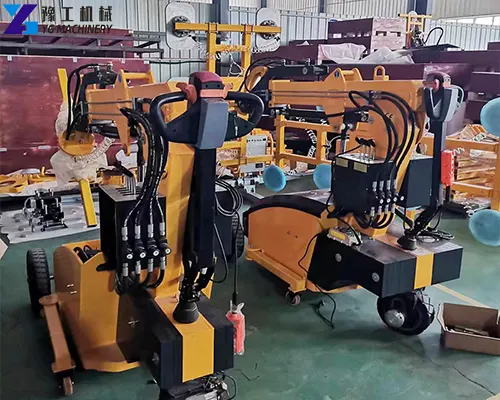
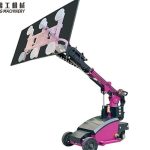
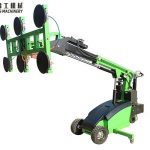
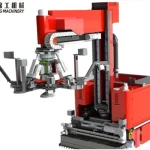
A glass lift robot is an intelligent glass handling and installation device that integrates a vacuum suction cup system, a hydraulic lifting arm, and a self-propelled chassis. It can independently perform the gripping, lifting, rotation, tilting, and precise positioning installation of large-sized glass panels, transforming the traditionally dangerous work requiring 5-8 people into an easy task that can be completed remotely by one person. This type of equipment is also commonly called a glazing robot, glass glazing robot, vacuum glass handling machine, or glass suction cup installation vehicle. As building curtain walls become larger and glass panels heavier, manual installation is not only inefficient and costly, but the risks of falls from heights and glass breakage continue to plague construction companies. The emergence of glass lift robots fundamentally solves these industry pain points.
YG’s glass lift robots have been exported to more than 30 countries, including the United States, Australia, Poland, the United Arab Emirates, Saudi Arabia, and Singapore, and are widely used in commercial building curtain walls, hotel lobby glass, shopping mall skylights, and villa panoramic windows.
1. The suction cup frame flips 180° electrically.
2. The support plate automatically retracts.
3. Hydraulic arm lifts electrically.
4. The base of the whole machine moves 100- 150 mm horizontally.
Manual (2kinds)
1. The suction cup holder can be manually rotated 90 degrees (electrically powered optional).
2. The suction cup holder can be manually rotated 360 degrees (electrically powered optional).
Usages
Mainly used for the handling, movement, and installation of materials such as glass, marble, wood, iron plate, etc.
What Are the Core Structural Components of a Glass Installation Robot?
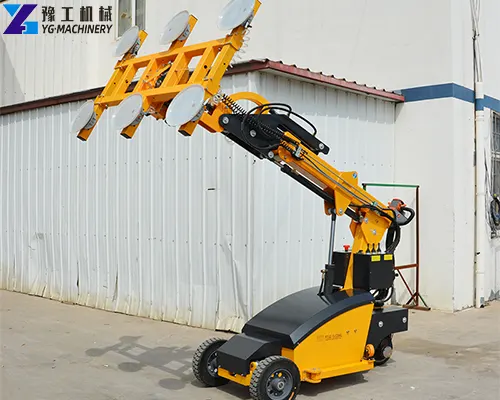
Self-propelled chassis system: Utilizing a wheeled or tracked chassis, it can move freely on construction sites and indoor spaces. The wheeled version is suitable for flat ground and offers flexible turning; the tracked version adapts to uneven sites, slopes, and muddy surfaces. With a chassis width of only about 800mm, it can easily pass through standard doorways and elevators.
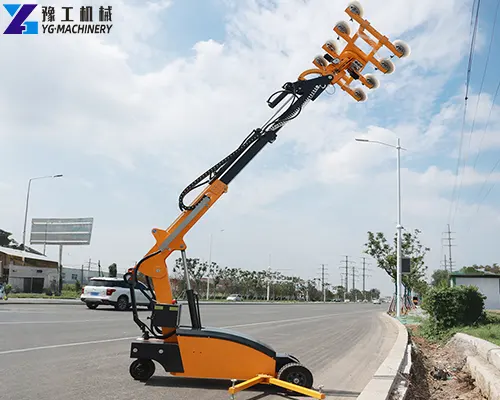
Lifting arm system: A multi-stage telescopic arm made of high-strength manganese steel provides vertical lifting force and horizontal reach. Lifting power comes from hydraulic cylinders, ensuring smooth and shock-free operation and preventing glass swaying during lifting.
Vacuum suction cup system: This is the robot’s “hand.” Composed of 4-8 large-diameter (Ø280-350mm) silicone suction cups, along with a dual-circuit independent vacuum pump, it firmly adheres to the glass surface. Even if one circuit fails, the other can safely maintain suction, a core safety design feature preventing glass from falling.
Attitude adjustment system: The suction cup frame can rotate 360°, tilt ±90°, and pitch 0-130°, with fine-tuning left-right translation (±100mm) and up-down adjustment (±150mm). This multi-degree-of-freedom adjustment capability allows glass to be precisely embedded into the window frame at any angle, achieving millimeter-level installation accuracy.
Power and control system: Powered by a 24V DC battery pack, a full charge provides 6-8 hours of continuous operation, completely eliminating the need for a power cord. Operation is via wireless remote control or wired handle, allowing one worker to complete all operations.
Where Can Glass Installation Robots Be Used?
Building curtain wall installation: The largest application scenario is the installation of glass curtain walls in high-rise buildings such as office buildings, commercial complexes, and hotels.
Interior decoration and renovation: Handling and installing large indoor glass elements such as shopping mall atrium glass, hotel lobby floor-to-ceiling windows, ultra-clear glass partitions in exhibition halls, and villa sunrooms.
Skylights and skylight installation: Robots can lift and install glass skylights in shopping malls, airports, and train stations from inside the building.
Glass processing plant handling: Used for the handling, loading, and transporting of large-sized glass in glass factories or deep processing workshops.
Stone and metal sheet installation: After changing the suction cups or clamps, robots can also install marble panels, aluminum composite panels, honeycomb panels, and other building materials.
Old building renovation and refurbishment: Performing glass replacement and renovation work inside existing buildings where space is limited but large glass panels need to be hoisted.
Subway and airport construction: Large-scale public building projects such as subway station entrance and exit glass, and airport terminal curtain walls.
Rail transit vehicle manufacturing: Glass installation for high-speed rail and subway cars.
What Are the Core Functional Features of Glass Installation Robots?
1. High load capacity, covering mainstream glass sizes
YG’s glass installation robots cover a load range of 300kg to 800kg, easily handling installation needs from ordinary window glass to large curtain wall insulated glass. Taking the YG-LD-600 as an example, it can carry a load of 600kg in the retracted state and 300kg in the extended state, fully meeting the glass installation needs of medium and large commercial buildings.
These adjustment functions allow installers to precisely align the robot with the window frame without moving the entire machine, achieving an installation accuracy of ±1mm, far exceeding the standard for manual installation.
3. Dual vacuum system, double safety guarantee
Utilizing an independent dual-loop vacuum design, each loop has its own vacuum pump, gas tank, and check valve. During normal operation, both loops operate in parallel, providing ample suction. In the event of a malfunction in one loop, the other can independently maintain suction, while an audible and visual alarm immediately alerts the operator. Even after a power outage, the vacuum gas tank maintains safe suction for over 30 minutes, giving workers sufficient time to handle the situation safely.
4. Electric mobility, one-man operation
The chassis is driven by a DC motor with stepless speed control, ensuring smooth movement. Wireless remote control has a range of up to 50 meters, allowing the operator to maintain optimal visibility and control of the robot, enhancing safety. Compared to traditional manual handling requiring 5-8 people, the robotic solution requires only one operator and one assistant for positioning.
Equipped with a high-capacity maintenance-free battery (2×12V/120AH starting), a full charge provides 6-8 hours of continuous operation, meeting the needs of a full day’s work. Charging time is approximately 8 hours, allowing for overnight charging and daytime use without disrupting project schedules. Some models support fast charging, reaching 80% charge in just 2 hours.
6. Excellent maneuverability in confined spaces
With a minimum width of only 810mm, the robot can easily pass through standard single-door doors, shopping mall corridors, and freight elevators. For scenarios such as interior decoration and renovation projects where large cranes cannot access, the glass installation robot is almost the only efficient solution.
Comparison of Two Solutions: Independent Glass Installation Robot vs. Spider Crane + Vacuum Cup
Many customers ask when choosing a solution: Should I buy an independent glass installation robot or use a spider crane with vacuum cups? Both solutions have their advantages and disadvantages; the key is your specific application scenario.
Solution 1: Independent Glass Installation Robot
Advantages:
Integrated design, ready to use out of the box, no additional equipment required.
Flexible movement, suitable for both indoor and outdoor use, can fit in elevators and doorways.
Simple operation, one day of training is sufficient to learn how to operate.
Relatively lower price, short payback period.
High fine-tuning precision, suitable for precise seam alignment installation.
Limitations:
Limited lifting height, generally between 3.5-5 meters (heavy-duty tracked models can reach 8-9 meters).
Limited load capacity, maximum around 1500kg.
Not suitable for installation on the exterior facades of super high-rise buildings.
Suitable Scenarios:
Interior decoration, low-rise commercial buildings, glass processing workshops, old building renovation, skylight installation
Solution 2: Spider Crane + Glass Suction Cup Combination
Advantages:
High lifting height: 5-ton spider crane can reach 16.5 meters, 10-ton model can reach over 20 meters.
Strong load capacity: Easily lifts ultra-large glass panels weighing over 1 ton when combined with suction cups.
Multi-purpose: In addition to glass, it can also lift other building materials, equipment, etc.
Especially suitable for high-rise curtain walls and large skylights.
Limitations:
Requires purchasing both the spider crane and glass suction cup equipment, resulting in a higher total investment.
Relatively complex operation: Requires experience in both crane operation and suction cup control.
Limited indoor use: Spider crane requires space to extend its outriggers.
Fine adjustment accuracy is slightly inferior to dedicated glass installation robots.
Primarily indoors, with relatively small glass panes and a limited budget → Choose a stand-alone glass installation robot.
High-rise curtain walls, large glass panes, and the need to handle other hoisting operations → Choose a spider crane + glass suction cup combination.
YG offers both options and can recommend the optimal configuration based on your project requirements. Many medium to large-scale engineering companies utilize both: robots for small indoor projects and spider crane combinations for large exterior projects.
Case Study: YG’s Glass Assembly Robots Used in the Renovation Project of a Warsaw Shopping Center in Poland
Client Background:
A professional facade contractor in southern Poland, primarily undertaking doors, windows, and curtain wall projects for commercial buildings and logistics warehouses. With the recovery of the Polish construction market, the demand for large glass panels has grown rapidly, but there is a severe shortage of skilled local installers.
Project Details:
An interior renovation project for a shopping center on the outskirts of Warsaw, requiring the replacement of over 200 large atrium and partition glass panels while the center was operational. The mall had limited space, making it inaccessible to large cranes, and work could only be done at night, with a very tight schedule.
Why Choose YG Glass Assembly Robots:
The client found the YG website while searching for “glass glazing robot” on Google. What attracted them was the YG machine’s narrow design (810mm width)—perfect for passing through the mall’s back-of-house aisles and freight elevators. Additionally, the electric drive is pollution-free and low-noise, making it particularly suitable for indoor nighttime work.
YG’s sales engineers recommended the YG-LD-400 model based on the customer’s glass dimensions (maximum 300kg, 2.4m x 3.6m) and provided complete compliance documentation for EU CE certification requirements.
Usage Results:
Nighttime construction efficiency exceeded expectations, with 8-10 glass panels replaced each night.
Electric operation resulted in low noise, completely unaffected by the mall’s daytime operations.
Zero safety incidents; passed inspection by the Polish building safety department.
The entire project was completed 3 days ahead of schedule.
Customer Testimonial:
“The challenge of this project lay in the limited space and nighttime construction restrictions. We previously tried using forklifts with manual suction cups, which was not only slow but also extremely dangerous. YG’s glass installation robot perfectly solved these problems—its narrow body allows it to fit in elevators, its electric drive produces no pollution or noise, and it’s very easy for workers to operate. We have already added YG to our list of regular suppliers, and we will purchase a larger model for our next logistics warehouse project.”
Frequently Asked Questions about YG’s Glass Assembly Robots
Q1: Is the glass installation robot difficult to operate? Does it require professional personnel?
A1: No, it’s not difficult. YG’s glass installation robot features a user-friendly control design; ordinary workers can operate it independently after one day of training. The remote control buttons are clear, with each action having a corresponding button, making the logic very intuitive.
Q2: How long does a fully charged unit last? How long does it take to charge?
A2: The standard configuration allows for 6-8 hours of continuous operation on a full charge, fully meeting a day’s work needs. Charging time is approximately 8 hours, and overnight charging is supported. The high-capacity battery version offers 10-12 hours of runtime and can also be equipped with a spare battery for quick replacement.
Q3: Can it suction curved or patterned glass?
A3: Flat suction cups are primarily suitable for smooth, flat glass. Curved glass requires a custom-made curved suction cup frame. Textured, frosted, or embossed glass requires assessment of surface flatness—as long as the surface is smooth enough to form a seal, it can be suctioned; otherwise, other clamping methods are needed.
Q4: Which is more suitable for me: a glass installation robot or a spider-shaped suction cup?
A4: Simple assessment: Primarily indoors, installation height within 5 meters, glass weight under 800kg → Choose an independent glass installation robot. High-rise curtain walls, large glass installations, and requiring additional hoisting capabilities → Choose a spider crane + glass suction cup combination. If unsure, contact a YG engineer for a free assessment.
Q5: How are overseas shipping and customs clearance handled?
A5: YG provides complete export services, including FOB/CIF trade options. All export models have CE certification, and some models have also passed ISO, SGS, and other certifications, with complete customs clearance documents. We have extensive export experience and have shipped to over 30 countries worldwide.
Q6: How long is the warranty period? What happens if it breaks down?
A6: The entire machine has a 1-year warranty, and core components (vacuum pump, hydraulic system, motor) have an 18-month warranty. Free replacement of parts for non-human-caused damage during the warranty period. In case of malfunction, 24-hour online technical support will be available for remote troubleshooting; 80% of problems can be resolved remotely. For parts requiring replacement, air freight will be prioritized for the fastest delivery.