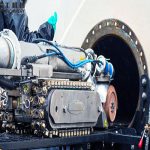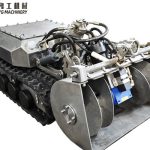
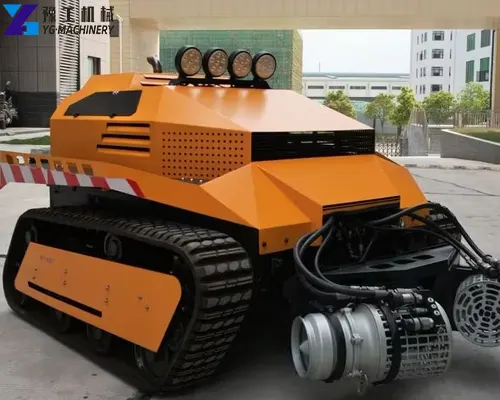
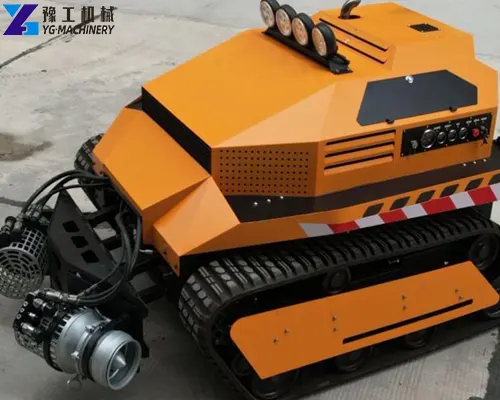
In scenarios such as urban waterlogging, river desilting, and swamp remediation, traditional drainage pump trucks and manual desilting methods face three major challenges: equipment getting bogged down in sludge and becoming inoperable, safety risks for personnel in deep water, and the inability of large machinery to access shallows or swamps. The amphibious hydraulic drainage robot—featuring all-terrain mobility, unmanned operation, and high-capacity drainage—effectively resolves these industry pain points, establishing itself as a premier, upgraded solution for emergency flood drainage, river management, and municipal sludge removal.
Also known in the industry as an amphibious flood drainage robot, all-terrain hydraulic sludge-pumping robot, or swamp desilting robot, this specialized drainage unit operates freely across land, shallow water, mudflats, and swamps. It is designed to replace manual labor and traditional pump trucks by accessing hazardous areas inaccessible to standard equipment, performing tasks such as high-volume drainage, sludge extraction, and wastewater transfer, thereby significantly enhancing operational safety and efficiency.
As a professional manufacturer of specialized robots, YG has exported this equipment in bulk to countries prone to heavy rainfall and flooding, including Thailand, Bangladesh, Indonesia, and the Philippines. By attaching specific tools, the unit can switch to a “silt-clearing robot” mode, offering a dual-purpose solution for drainage and desilting that adapts to the requirements of various projects. If you are interested, please contact us today for more product information.
Amphibious Hydraulic Drainage Robot Technical Parameters
| Item | Technical Parameters |
| Dimensions | 3400mm*1850*2200mm |
| Overall Weight | 2700kg |
| Travel Speed | Motor speed ≥3km/h |
| Maximum Discharge | 600m/H |
| Head | 10m |
| Suction Depth | ≤300mm |
| Maximum Climbing Angle | ≥30° |
| Maximum Obstacle Clearance | ≥200mm |
| Linear Speed | ≥1.5 |
| Maximum Wading Depth | ≥0.6m |
| Power | Diesel engine rated power: ≥60/1500 (kw/r/min) |
| Continuous Working Time | ≥8h |
| Travel Mode | Can travel independently, no external power
required, all-terrain tracked drive |
| Drainage Distance | ≥200m |
| Self-Suction Height | 6m |
| Maximum Permissible Particle Size | ≥50mm |
| Drainage Outlet Diameter | ≥DN200 |
| Ambient Temperature | 0℃~40℃ |
| Lighting | Yes |
| Hydraulic Output Terminal | Hydraulic output flow 20-40lpm |
| Minimum Braking Distance | 2m |
| Inlet/Outlet Configuration | Yes |
| Fuel Tank Capacity | ≥100L |
| Diameter of Solid Particles Passed Through | 50mm |
| Remote Control | (1) The pump unit adopts a remote control operation mode; (2) Remote control distance: ≥200m. |
What Are the Key Features of the YG Amphibious Drainage Robot?
- Amphibious All-Terrain Capability: Operates freely across land, shallow water, mudflats, and marshes; features a maximum wading depth of 2 meters and a 25° climbing ability, making it suitable for over 90% of complex operational scenarios.
- High-Capacity, Efficient Drainage: Equipped with a hydraulically driven solids-handling pump; offers selectable flow rates of 300–800 m³/h and a discharge head of 10–20 meters, delivering drainage efficiency more than double that of traditional mobile pump trucks.
- 500-Meter Remote Unmanned Operation: Comes standard with wireless remote control and real-time HD video transmission; operators remain outside hazardous zones, ensuring zero safety risk.
- Rapid Attachment Switching: Dredging attachments can be swapped in just 10 minutes, allowing the unit to switch from drainage to dredging modes—providing dual functionality and eliminating the need to purchase separate dredging equipment.
- Highly Durable and Corrosion-Resistant Design: Core components feature IP67 waterproofing and corrosion resistance; includes a stainless steel chassis and corrosion-resistant tracks, enabling operation in environments such as municipal sewage, mildly chemical wastewater, and seawater.
- Rapid Deployment Without Hoisting: The unit can drive itself onto and off a flatbed trailer and proceed directly to the work area upon arrival; no heavy lifting equipment is required, and operations can begin within 10 minutes.
What Are the Advantages of the Amphibious Hydraulic Drainage Robot?
- Safety—keeping personnel out of harm’s way. The biggest issue with traditional flood drainage is that “people have to get into the water.” Accumulated urban water may contain live electrical lines, toxic chemicals, or sharp debris, making manual operations extremely risky. Drainage robots keep operators completely away from hazardous waters, increasing operational safety by over 90%. This is particularly crucial in scenarios such as flooded underground garages, chemical spill zones, and sewage network overflows.
- Efficiency—rapid deployment and powerful drainage. Traditional drainage pumps require transport to the site, cable laying, and hose connection before work can begin—a process that typically takes 1–2 hours. Drainage robots can be driven directly to the site, remotely guided into the water, and started with a single button; the entire deployment takes just 15–20 minutes. Deployment efficiency improves by approximately 60%, and the required workforce drops from eight people to two.
- Flexibility—going wherever the water is. Traditional drainage trucks are bulky and must remain roadside, extending hoses to reach the water; they are ineffective in underground spaces or narrow streets. Drainage robots are compact (weighing 800–1,200 kg), allowing them to pass through 1.2-meter-wide openings and enter confined spaces like underground garages, culverts, and tunnels. Their amphibious design enables seamless transitions between water and land without the need for additional transport equipment.
- Economy—lower overall costs. Although the purchase price of a single unit may appear higher than that of several traditional pumps, the total cost of ownership is lower: the workforce is halved, deployment time is cut by 60%, maintenance costs amount to only 3–5% of the unit price, and the equipment has a lifespan of 8–10 years. Most importantly, it eliminates the massive compensation and social costs associated with personnel casualties.
Where Are Amphibious Hydraulic Drainage Robots Suitable for Use, And How Do You Choose the Right Equipment for Your Needs?
| Application Scenarios | Specific Operating Conditions | Recommended Configurations |
| Emergency urban flood drainage | Accumulated water in underground garages, underpasses, and low-lying streets | Medium-sized tracked model, 300–800 m³/h |
| Subway station and tunnel flood drainage | Deep underground spaces with water depths reaching several meters | Large-scale dual-pump parallel system, ≥1,000 m³/h |
| Mine and shaft dewatering | Mine pit seepage and underground water accumulation (potentially containing mine tailings) | High-head model (≥25m) with corrosion-resistant pump housing |
| Water conservancy emergency response | Levee seepage drainage and emergency discharge at reservoir spillways | Amphibious model, capable of floating and operating on the water surface |
| Industrial park drainage | Accumulated water around chemical plants and power facilities | Explosion-proof model, equipped with leakage detection |
| River and lake emergency drainage | Urban landscape, water bodies, and river overflows | High-flow model, capable of handling aquatic weeds and debris |
| Post-disaster reconstruction drainage | Water accumulation in ruins following earthquakes or floods | High obstacle-crossing capability, equipped with demolition/breaking functions |
| Agricultural drainage and irrigation | Large-scale farmland drainage and dewatering within cofferdams | Medium-sized wheeled model, easy to relocate between fields |
Which Regions and Countries Have the Greatest Need for the YG Hydraulic Drainage Robot?
- Coastal cities in Southeast Asia: Countries such as the Philippines, Indonesia, Thailand, and Vietnam frequently face typhoons and heavy rains; their urban drainage infrastructure is generally inadequate, leading to severe water accumulation in underground spaces.
- Monsoon regions in South Asia: India and Bangladesh suffer from severe flooding during the annual monsoon season; there is a massive demand for underground drainage solutions, particularly in low-lying cities like Mumbai and Dhaka.
- Emerging cities in the Middle East: Cities such as Dubai and Riyadh are rapidly expanding their underground commercial spaces and parking facilities, while an increase in extreme rainfall events is driving the need for upgraded drainage equipment.
- Urbanizing areas in South America: Major cities like São Paulo (Brazil) and Mexico City frequently experience urban flooding, prompting municipal authorities to step up the procurement of smart drainage equipment.
- Older urban areas in Europe: Century-old underground pipe networks in cities like London and Paris are often overwhelmed during extreme weather, creating a need for efficient emergency drainage solutions.
- Infrastructure projects in Africa: As Chinese infrastructure companies undertake numerous municipal pipeline and underground engineering projects across Africa, the demand for supporting drainage equipment continues to grow.
These markets share several common characteristics: rapid urbanization, frequent extreme weather events, an inability of traditional drainage methods to meet demand, and a high level of acceptance for cost-effective, smart equipment manufactured in China.
Drainage Robots vs. Desilting Robots: How to Choose?
| Comparison Dimension | Dewatering Robot | Desilting robot |
| Core Task | Rapidly pumps out large volumes of accumulated water | Removal of silt deposits from pipelines or underwater |
| Key Metrics | Flow rate (m³/h), Head (m) | Desilting width, silt water content |
| Operational Speed | Fast; performance measured in hours | Slow; billed on a daily basis |
| Water Quality Requirements | Capable of handling sewage containing debris | Targets compacted silt and high-concentration deposits |
| Typical Scenarios | Emergency drainage for rainstorm-induced waterlogging and floods | Routine pipeline maintenance, reservoir desilting |
| Operational Method | Pumps accumulated water to a designated discharge point | Cutting, crushing, suction, and transport |
| Amphibious Capability Required? | Yes, requires entry into the flooded area | Required in some cases, primarily for in-pipe operations |
- When should you choose a drainage robot? Opt for a drainage robot when your primary requirement is rapid water removal—such as for handling urban flooding from heavy rains, emergency flood relief, clearing accumulated water at construction sites, or mine dewatering. These robots prioritize high flow rates, rapid deployment, and unmanned operation.
- When should you choose a desilting robot? Choose a desilting robot when your main goal is to remove sludge from the bottom of pipes or basins—such as for municipal pipeline maintenance, desilting sewage treatment tanks, or removing riverbed sediment. These robots focus on precision work and thorough removal.
- What if you need both capabilities? Some high-end drainage robots feature reserved hydraulic ports that allow for the attachment of augers or sludge suction heads, enabling a single unit to perform both drainage and desilting tasks. If your operational scenario involves both emergency drainage and routine desilting maintenance, a multifunctional configuration like this is recommended.
Frequently Asked Questions About the YG Amphibious Drainage Robot
Q1: What is the difference between an amphibious hydraulic drainage robot and a silt-clearing robot?
A1: Drainage robots focus on rapidly pumping out large volumes of accumulated water, with flow rate and lift height as key performance indicators; silt-clearing robots focus on removing sludge from pipelines or underwater areas, with silt-clearing efficiency as the key metric. While their objectives differ, some high-end drainage robots can also perform silt-clearing functions.
Q2: What power source does the drainage robot require?
A2: Amphibious hydraulic drainage robots are typically powered by a diesel engine that drives the hydraulic system; they do not require an external power supply and can operate independently during power outages. Some models support lithium battery power or external hydraulic power stations.
Q3: Is the equipment prone to corrosion in sewage environments?
A3: The chassis is made of stainless steel, and core components undergo IP67-rated waterproofing and anti-corrosion treatment, making them suitable for municipal sewage and mildly corrosive water; regular application of anti-corrosion maintenance agents can significantly extend the equipment’s service life.
Q4: Is the equipment easy to transport between sites?
A4: The equipment is compact and lightweight, allowing for transport via standard flatbed trailers without the need for specialized lifting gear; it can drive itself onto and off the trailer and begin work immediately upon arrival, ensuring rapid deployment.
Q5: What is the remote control range of the drainage robot?
A5: Mainstream models have a wireless remote control range of 300–500 meters. High-end models support 4G/5G remote control with no distance limitations, making them suitable for fully remote operations in high-risk environments.
Q6: Can the drainage robot handle sewage containing impurities?
A6: Yes. Hydraulic drainage robots can typically pass solid particles with diameters of 25–30 mm and are equipped with anti-clogging impellers, enabling them to handle mixed sewage containing silt, sand, and debris.
Q7: How should the drainage robot be maintained to extend its service life?
A7: After each use, flush the pump chamber and inspect seals and tracks for wear; replace hydraulic oil and filter elements according to the manual’s schedule; and store the unit in a dry, well-ventilated area. Under normal operating conditions, annual maintenance costs amount to approximately 3%–5% of the equipment’s total price.