Top, Professional and Reliable Manufacturer of Various Machinery – YG Machinery
Automated Straddle Carrier
electric straddle carrier
container terminal straddle carrier
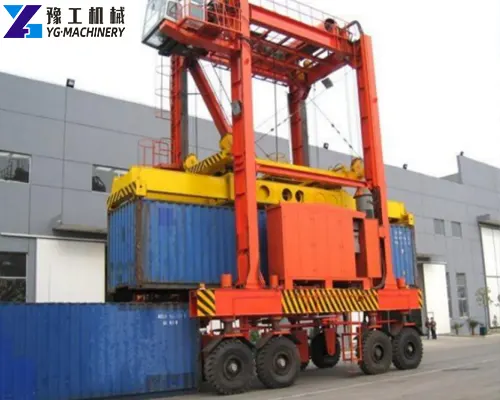
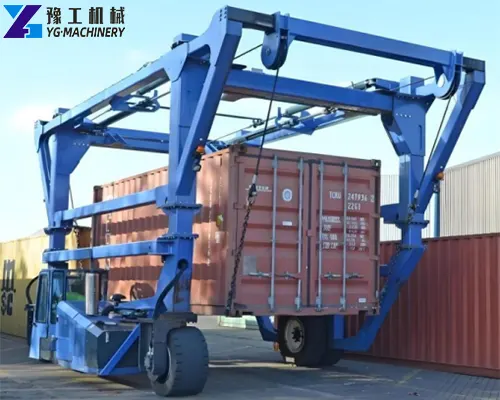
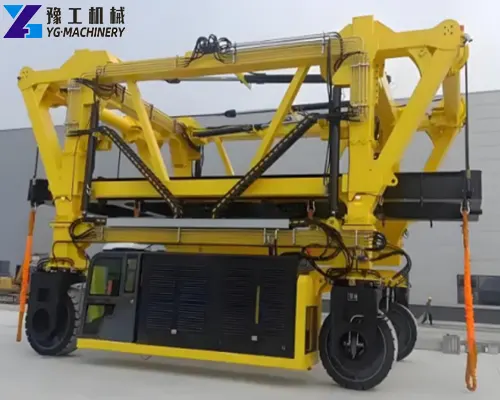
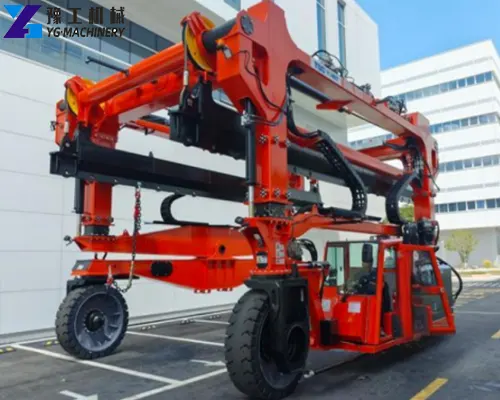
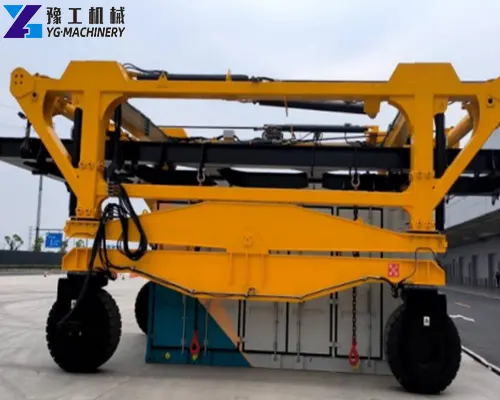
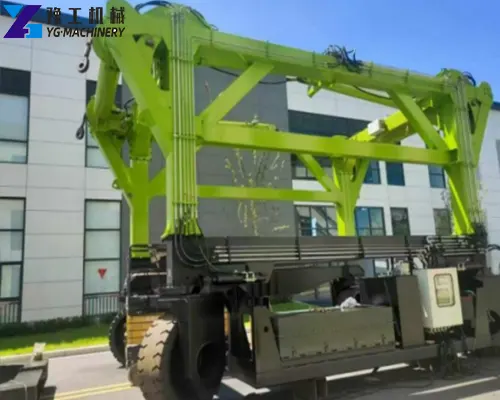
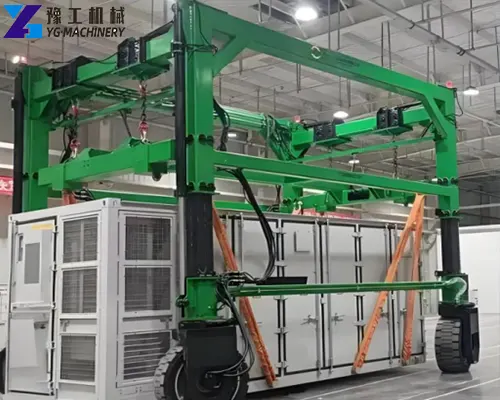
An automated straddle carrier is a straddle carrier that performs container pick-up, transport, stacking, and retrieval with minimal or no human driving — guided by positioning systems, onboard sensors, and yard management software. Where a conventional straddle carrier depends on an operator in every cabin, every shift, an automated unit follows dispatch instructions from the terminal operating system (TOS) and repeats precise, all-weather handling cycles around the clock.
For container terminals, inland depots and logistics parks in Australia and Southeast Asia facing rising wages, driver shortages and growing vessel sizes, this class of automatic container handling equipment turns the yard from a labor-limited operation into a system-driven one. YG supplies automated and semi-automated straddle carrier solutions with electric or diesel-electric drive, engineered to each yard’s layout and throughput targets.
Customer Pain Points in Container Yard Operations
Labor cost and driver shortage. Skilled straddle carrier operators are hard to recruit and retain; three-shift yards need multiple drivers per machine, and wages plus overtime keep rising.
Human variability. Stacking accuracy, cycle times, and damage rates depend on the individual driver — mis-picks, knocked containers, and chassis incidents vary by shift and by experience.
Fuel and idle waste. Conventional diesel machines burn fuel during waiting, idling, and empty travel; fuel price volatility makes operating costs hard to forecast.
Throughput ceilings. Yard capacity is capped by manual cycle times, break times and shift handovers — peaks in vessel or gate arrivals create congestion.
Safety exposure. Man-machine interaction in the yard means collision risks with people, trucks, stacks and other equipment.
Night and weather operation. Heat, rain, dust, and night shifts reduce manual performance and increase fatigue-related risk.
Automation Levels: Choose the Step That Fits Your Yard
Container yard automation does not have to be all-or-nothing:
Level 1 — Conventional with assist. Driver-operated with cameras and proximity warnings; useful as a fleet modernization baseline.
Level 2 — Remote operation. One control-room operator drives one or more machines remotely for hazardous or repetitive cells.
Level 3 — Semi-automated. Automated travel and stacking between blocks, with human handling of exceptions and truck interchange.
Level 4 — Fully automated. Unmanned yard cycles under TOS dispatch, supervisors managing by exception; the target configuration for greenfield and expansion projects.
Levels can be staged — machines and software installed for Level 2–3 can be upgraded as the operation matures, protecting the investment.
Suitable Applications of Container Straddle Carriers
Container terminals — quay-to-yard and yard-to-gate transport and stacking.
Inland container depots and intermodal yards — rail/inland terminal container handling.
Port logistics parks and empty-container yards — high-density stacking and inventory management.
Industrial terminals — factories and mills with large containerized inbound/outbound flows.
Regional hubs in Australia and Southeast Asia — sites where driver availability, heat and long operating hours make automation particularly valuable.
Safety Systems of Automated Straddle Carrier
Automated machines operate around people, trucks and stacks, so safety is engineered in layers:
360° obstacle detection — LiDAR and ultrasonic sensors covering travel and lift paths.
Camera systems — multi-camera vision for remote supervision and exception handling.
Automatic slow-down and stop — graded response zones; the machine reduces speed or halts before contact.
Geofencing and speed zoning — speed and access rules enforced automatically by area.
Spreader interlocks — twistlock confirmation, overload detection, and anti-collision on the stack.
E-stops — onboard and control-room emergency stops with safe-state behavior.
Audible and visual warnings — directional alarms and status lights for ground staff.
Fully electric (battery) straddle carrier — suited to yards with charging infrastructure; lower energy cost per move, lower noise, and no local emissions. Battery capacity, charging strategy (opportunity charging during breaks or battery swap), and shift endurance are engineered to the operating profile; endurance figures are provided per project based on moves per hour and cycle distances rather than as a fixed number.
Diesel-electric hybrid — the flexible option for yards without charging infrastructure or with long, unpredictable duty cycles; the diesel generator charges the drive system efficiently at governed engine speed, reducing idle waste versus conventional drive.
The right choice depends on local electricity and diesel prices, grid capacity, emissions rules, and shift patterns — your proposal compares both options on total operating cost.
Maintenance, Commissioning and After-Sales Support
Installation and commissioning: site survey, yard mapping, lane and marker setup, TOS interface configuration, and supervised trial operation with acceptance cycles.
Training: control-room supervisors and maintenance teams are trained on fleet software, exception handling, battery/charging systems (for electric units), and routine servicing.
Spare parts: recommended spares package plus ongoing supply of wear items (sensors, tires, spreader components, battery-system parts).
Warranty and service: warranty terms, service intervals and response times are defined in the supply contract; certification documents are provided where valid certificates exist.
ROI Logic: How to Evaluate the Investment
There is no single payback number — it depends on local wages, fuel or electricity prices, yard throughput and current damage rates. Evaluate the business case on these lines:
Labor: drivers per machine across three shifts versus one supervisor per multiple automated machines.
Energy: electricity or governed diesel-electric consumption versus conventional diesel with idling.
Damage and claims: fewer container, chassis, and stack incidents through repeatable precision.
Throughput per hectare: tighter stacking and consistent cycles raise yard utilization and throughput.
Operating hours: all-weather, all-shift performance without fatigue-related slowdown.
Scalability: added machines extend capacity without a proportional hiring program.
A simple payback estimate compares these annual savings against the equipment, infrastructure (charging, network, control room), and commissioning investment. Share your current fleet size, shift pattern, and cost structure, and our engineers will build the ROI model around your numbers.
Frequently Asked Questions about YG’s Customizable Container Straddle Carriers
Q1: What containers can it handle?
A1: Standard 20 ft, 40 ft, and 45 ft ISO containers, laden or empty, with high-cube configurations available. Twin-lift (20 ft pairs) arrangements can be specified. Exact load ratings are confirmed in the technical proposal for your container mix.
Q2: How high can it stack?
A2: Reference configurations stack 2–4 containers high, typically 1-over-2 up to 1-over-3 arrangements. Higher stacking density depends on yard cell design, container weight distribution, and the selected machine model.
Q3: What ground and site conditions are required?
A3: The yard needs level, load-bearing paved surfaces (concrete or asphalt to an agreed specification), adequate lane widths and turning clearances, and clearance under any overhead structures. A site survey confirms pavement load ratings, drainage, and lane markings before design finalization.
Q4: What is the battery endurance for electric models?
A4: Endurance is calculated per project from moves per hour, average cycle distance, lift frequency, and shift length. Charging is designed around your operation — opportunity charging during breaks or battery-swap at shift change. Share your expected operating hours, and we size the battery/charging package.
Q5: What about lead time, warranty, spares and remote service?
A5: Lead time is quoted per order against fleet size and customization level. Warranty terms are written into the supply contract, a recommended spares package is supplied with the fleet, and controllers support remote diagnostics and software updates. Certification documents are provided where valid certificates exist.
Q6: Can we automate an existing yard or only new builds?
A6: Both. Brownfield yards often start with remote or semi-automated operation in selected blocks and expand; greenfield projects can be designed for full automation from the start.
Request a Custom Handling Plan and Quotation
Send the details below and our engineering team will prepare a fleet proposal, automation-level recommendation, and budget estimate:
Maximum load/container weight (tons)
Container specifications (20 ft / 40 ft / 45 ft, laden/empty ratio)
Required stacking layers
Yard/site dimensions (area, lane layout, site plan if available)