Top, Professional and Reliable Manufacturer of Various Machinery – YG Machinery
Rotating Grapple Saw
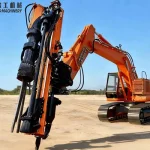
excavator rotating grapple saw
rotating grapple saw
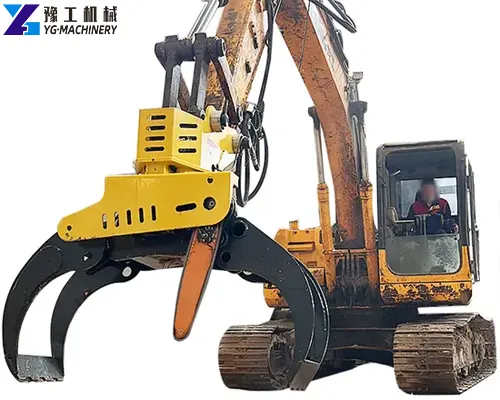
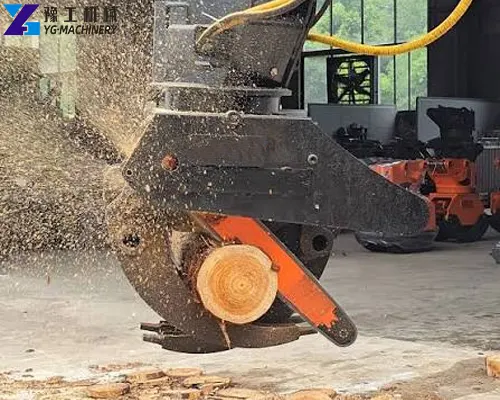
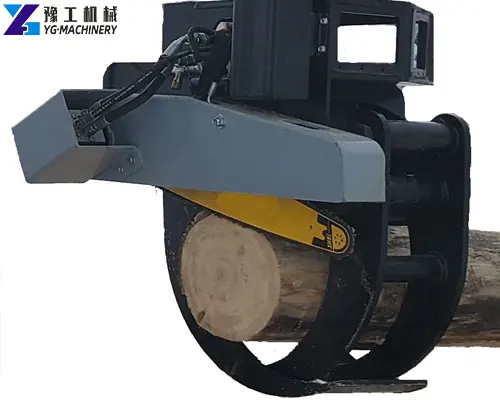
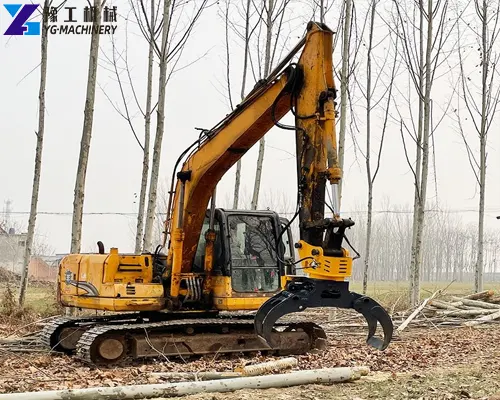
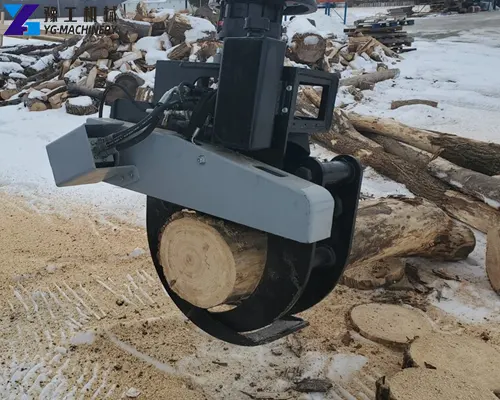
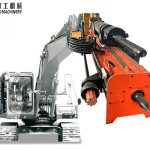
If your crew still uses a separate log grapple and handheld chainsaw for tree removal and land clearing jobs, you know the downsides well. Operators have to switch tools back and forth, reposition the excavator repeatedly, and face higher safety risks during cutting. A rotating grapple saw solves these headaches by combining a heavy-duty grapple clamp and cutting saw into one single excavator attachment. It grabs the tree trunk or log firmly, rotates it to your desired angle, and cuts timber without needing extra handling. This all-in-one design is built to streamline forestry, site clearing, and vegetation management work for contractors, tree service teams, and equipment rental businesses.
Our YG rotating grapple saw has two standard models to match excavators from 6 ton up to 20 ton, so you can pick the right size for your existing carrier machine. It works with mainstream excavator brands including Caterpillar, Komatsu, Hitachi, Volvo, Develon, Hyundai, SANY, XCMG, Kubota, and Yanmar. We always recommend that you share your exact excavator model and hydraulic parameters with our team before ordering to confirm flow, pressure, and mounting dimensions for a perfect fit.
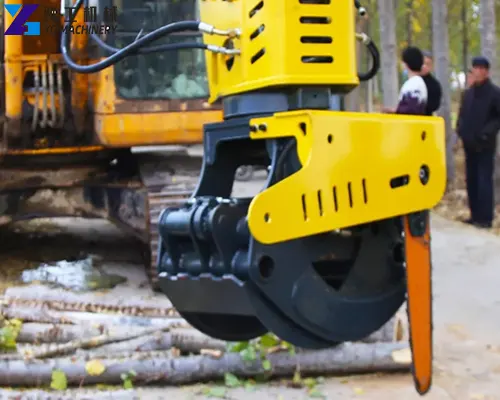
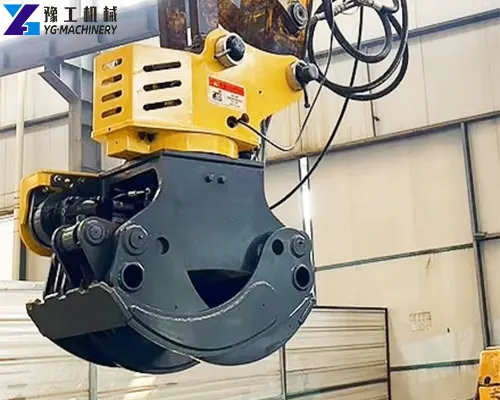
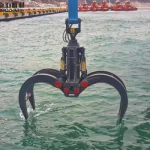
The excavator supplies hydraulic power to the attachment. Its grapple holds the timber, the rotating assembly provides orientation, and the saw performs the cut.
A typical operating sequence is:
Position the excavator on suitable, stable ground.
Approach the timber within the approved working envelope.
Rotate the attachment into an appropriate position.
Close the grapple and verify secure engagement.
Perform the cut according to the operating procedure.
Move and place the retained section within the machine’s limits.
The exact sequence depends on whether the timber is lying on the ground, stacked, or standing. Standing-tree and elevated cutting require a specific work plan; they are not equivalent to cross-cutting supported logs.
The self-locking turntable function supports position holding as specified by the attachment design. It is not a substitute for checking load limits, hydraulic condition, or safe operating procedures.
Common Applications for Rotating Grapple Saw
The rotating grapple saw is a versatile forestry attachment, and it fits many different project types.
Land clearing for construction sites: Clear standing trees, brush, and overgrown vegetation to prepare building lots, housing sites, and industrial yards. You can grab, cut, and stack logs in one continuous workflow.
Tree removal & landscaping jobs: Perfect for residential and commercial tree service teams, especially for removing dangerous leaning trees and overgrown trees beside roads or buildings.
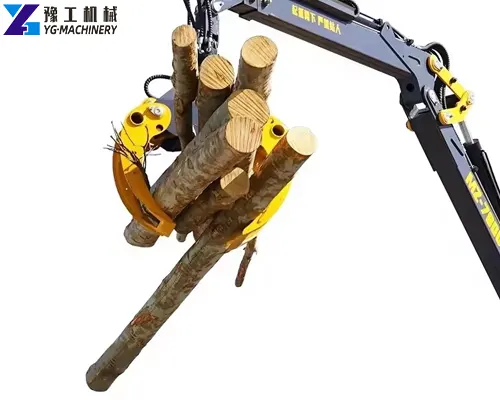
Logging and timber harvesting: Suitable for small and medium-scale logging operations, cutting trunks to required log lengths and sorting timber on site.
Roadside vegetation maintenance: Trim and remove trees and bushes along highways, rural roads, and power line corridors to keep access clear.
Orchard and farm renovation: Cut old fruit trees, clear thickets, and prune large woody plants on farmland.
Firebreak construction: Clear strips of trees and brush to build firebreaks for wildfire prevention in forest zones.
Waste log and wood scrap disposal: Process leftover logs, storm-damaged trees, and wood waste for easier loading and transport.
If your projects also involve cutting rock, concrete, or hard stone, you may look at our excavator rock saw for those heavy cutting tasks. For jobs that only require grabbing, sorting, and stacking logs without cutting, our standard log grapple is a more cost-effective choice. These attachments can work alongside your grapple saw to build a full set of site handling tools.
Why Choose YG Rotating Grapple Saw Over Separate Grapple + Chainsaw Setups
Many contractors start with a basic grapple plus a handheld or separate chainsaw, but that setup creates several bottlenecks on site.
Higher job site safety: Operators do not need to work close to falling trees or hold a separate chainsaw near unstable timber. Cutting is controlled from inside the excavator cabin.
Faster cycle times: Grab, rotate, cut, and release with one attachment. You eliminate the time wasted switching between two different tools. This directly increases how many trees or logs you can process per day.
Lower transport and storage costs: You only need to haul and store one attachment instead of two separate pieces of equipment.
Consistent cutting quality: The locked rotating turntable keeps timber steady during cutting, so cuts are cleaner and more predictable.
Reduced maintenance downtime: The factory-fitted automatic lubrication system protects bearings and rotating joints, meaning fewer breakdowns and less daily greasing work for your crew.
When selecting between YG-600 and YG-2000, match the model to your excavator size and the typical log diameter you cut. The YG-600 is compact and light for mini excavators between 6–10 ton, great for tight-access jobs like residential tree removal. The YG-2000 has stronger clamping force, a longer 21-inch saw guide, and a higher pressure rating, built for larger 10–20 ton excavators and thicker logs on bigger clearing projects.
Frequently Asked Questions About Excavator Grapple-Saw Attachments
Q1: Can it be mounted on Caterpillar, Komatsu, or other brands?
A1: Yes. The grapple saw can be configured for mainstream excavator brands, including Caterpillar, Komatsu, Hitachi, Volvo, Develon, Hyundai, SANY, XCMG, Kubota, and Yanmar. Confirm the specific excavator model and hydraulic specs before ordering.
Q2: What is the maximum size of log it can cut?
A2: Cutting capacity mainly depends on the saw guide length. YG-600 has an 18-inch guide, and YG-2000 comes with a 21-inch guide. Share your typical log diameter with us so we can confirm suitability.
Q3: Does this grapple saw require extra hydraulic lines?
A3: It needs auxiliary hydraulic circuits on your excavator to power both the clamping cylinder and rotation motor. Our team will send you hydraulic requirement details after inquiry.
Q4: Is the automatic lubrication system standard?
A4: Yes, automatic lubrication is included as standard on both YG-600 and YG-2000 models, to simplify routine maintenance.
Q5: Can I use this grapple saw in narrow spaces such as backyards?
A5: The compact YG-600 model works well for confined areas when paired with a 6–10 ton mini excavator, common for residential tree service.
Q6: Do you supply spare parts for the grapple saw?
A6: We provide consumable spare parts such as saw chains, guide bars, seals, and hydraulic hoses for after-sales maintenance.