Top, Professional and Reliable Manufacturer of Various Machinery – YG Machinery
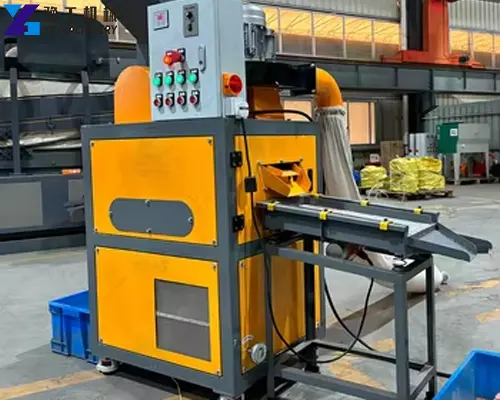
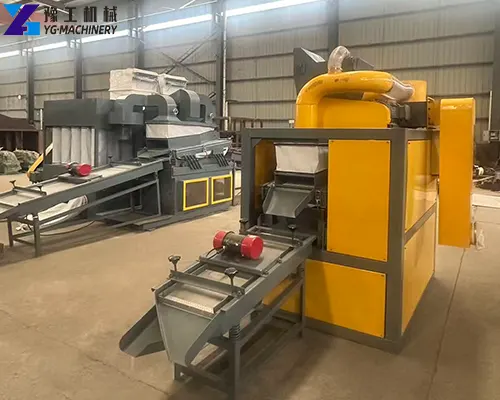
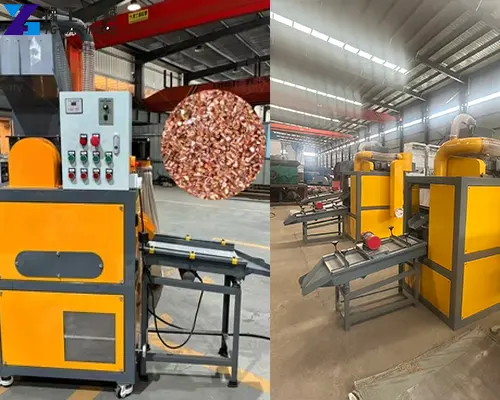
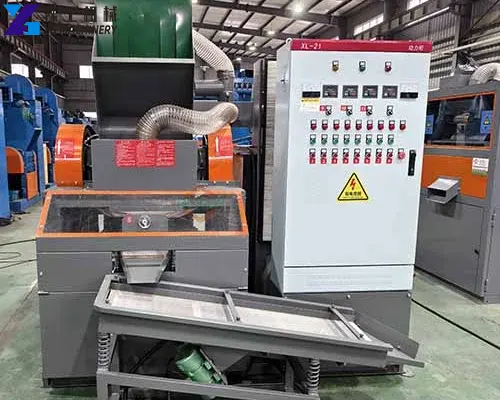
Copper Wire Granulator Machine
waste copper wire recycling machine
copper wire recycling machine
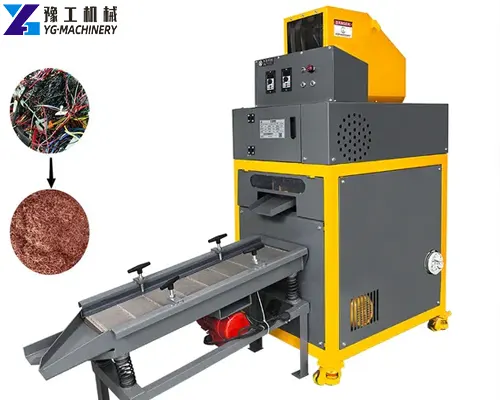
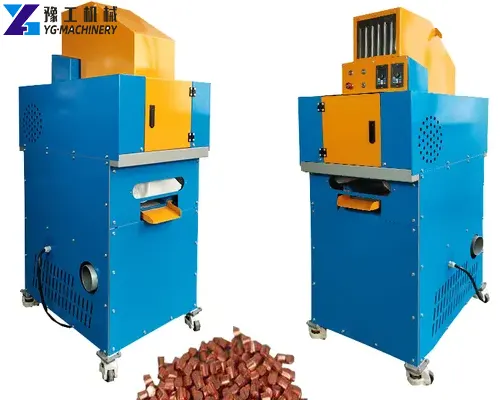
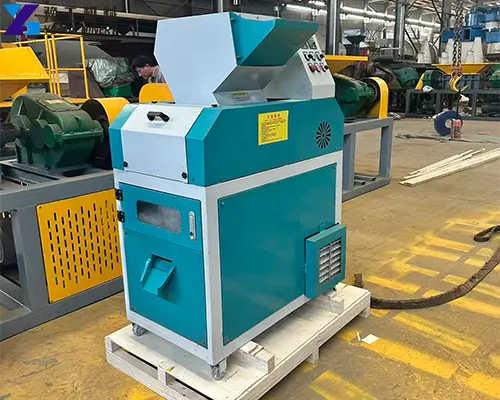
Is your scrap wire suitable for granulation? What preparation does it need? And which machine can handle your daily workload without buying unnecessary capacity? A copper wire granulator machine cuts suitable insulated wire into small particles and separates the metal fraction from the insulation. It is an option for recyclers handling fine, tangled, or mixed-length wires that are difficult to process efficiently by stripping each cable individually.
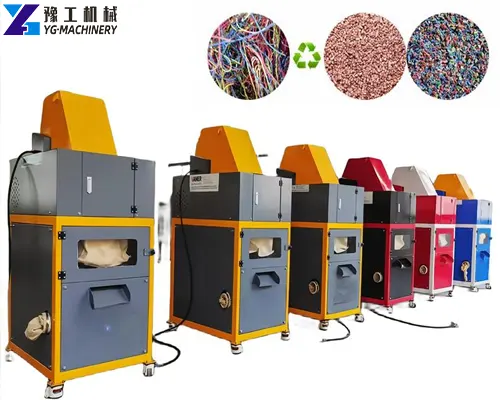
At YG Machinery, we help you assess the material first. Our supplied model range covers reference processing capacities from 40–80 kg/h to 500–800 kg/h, with different power and installation requirements.
Send your wire photos, approximate diameter, and daily processing quantity. We can then identify the configuration details needed for a matched quotation.
A copper cable recycling machine produces a copper-rich fraction and a separate insulation-rich fraction from suitable feed.
The objective is to create materials that are easier to classify and sell. However, their value depends on composition, contamination, separation quality, and the requirements of local buyers.
Granulation does not refine copper chemically. It also does not automatically make mixed insulation suitable for every plastics-recycling process.
Before selecting equipment, confirm what you want to recover and who will accept the output. A machine quotation should address those requirements rather than promise a universal selling price or payback period.
How Does the Process Work?
A typical dry wire granulation process combines cutting, size control, and density-based separation.
1. Prepare the Feed
Sort the incoming wire and identify components that may need removal or separate treatment. Plugs, steel reinforcement, large connectors, moisture, and contamination can affect the required process.
2. Cut the Wire into Particles
The cutting chamber reduces suitable wire into smaller pieces. A sizing screen controls which particles can move to the next stage.
3. Separate Metal from Insulation
Airflow and a separating table use differences in particle behavior to divide the heavier metal-rich material from lighter insulation.
4. Collect the Output
The fractions discharge separately for inspection, storage, sale, or additional processing. The actual dust-control and screening arrangements depend on the supplied configuration.
Separation performance depends on feed consistency, particle size, airflow, equipment settings, and material composition. A single purity claim should not replace an assessment of your actual wire.
Applications: Which Scrap Streams Can Be Assessed?
A wire granulation machine can serve several recycling businesses, but the source of the cable does not establish suitability by itself.
Scrap Source
Typical Material
Main Purchasing Focus
Scrap collection yards
Mixed insulated wires from different suppliers
Sorting, diameter variation, contamination, and copper content
Cable manufacturers
Production offcuts and rejected cable
Consistent feed, insulation type, and required throughput
Electrical contractors
Installation offcuts and replacement wiring
Plugs, connectors, mixed metals, and batch sizes
Appliance dismantlers
Wiring removed from appliances
Removal of terminals and non-wire components
Vehicle dismantlers
Automotive wiring harnesses
Tape, connectors, fine strands, and preparation requirements
Telecommunications recycling
Communication and data cables
Conductor material, fine-wire behavior, shielding, and mixed construction
Building demolition
Recovered electrical cable
Moisture, debris, steel, and contamination
Industrial maintenance
Replaced machine and control wiring
Oil contamination, terminals, cable construction, and presorting
Automotive, communication, power, and electronic cables are established feed categories for cable-recycling systems. Nevertheless, different streams may require shredding, stripping, or additional separation stages.
Do not assume that all communication cables contain recoverable copper. Likewise, copper-clad materials and copper–aluminum mixtures require separate assessment.
Do You Need Related Equipment?
Wire Stripping Machine
Assess a wire stripping machine where the main feed is suitable for thick, straight cable and retaining the conductor in longer lengths is useful. Stripping and granulation serve different material-handling needs.
Cable Shredder
A cable shredder may prepare long, bulky, or tangled material for downstream processing. Its need depends on the granulator’s feed limits and the actual cable stream.
Magnetic Separator
Where ferrous contamination is present, assess magnetic separation as part of the preparation or processing route. It is not a substitute for removing every unsuitable connector or component.
These are options to evaluate—not a mandatory package. Request confirmation of equipment compatibility and inclusion.
Frequently Asked Questions About Copper Granulator Machines
Q1: How fine a wire can it process?
A1: Extremely fine capillary wire (such as earphone wire) usually requires a dedicated fine-wire crushing module or enhanced electrostatic separation configuration. Provide material photos when requesting a quotation.
Q2: What copper purity can be achieved?
A2: With proper adjustment of airflow and electrostatic parameters, copper separation purity typically reaches over 99%. Actual purity depends on material cleanliness and operation.
Q3: How many tons per day?
A3: Using the parameter table, for example, the YG400 processes 150–300 kg per hour, which is about 1.2–2.4 tons per 8-hour day. For larger scale, the YG800 can process 4–6 tons or more per day.
Q4: Is the machine noisy? Does it produce dust?
A4: The equipment includes noise reduction and a pulse dust collection system. Noise and dust are controlled within normal industrial equipment limits. Contact our technical team for specific noise values.
Q5: How often are the blades replaced?
A5: Blade life depends on material abrasiveness. Blades can typically be resharpened several times before replacement. The actual replacement interval should be evaluated based on operating conditions.
Q6: Can the voltage be customized?
A6: Yes. Different countries and regions use different voltage standards (such as 220V/380V/440V). Confirm the configuration with our engineers before ordering.