Top, Professional and Reliable Manufacturer of Various Machinery – YG Machinery
Excavator Mounted Hydraulic Rock Splitter
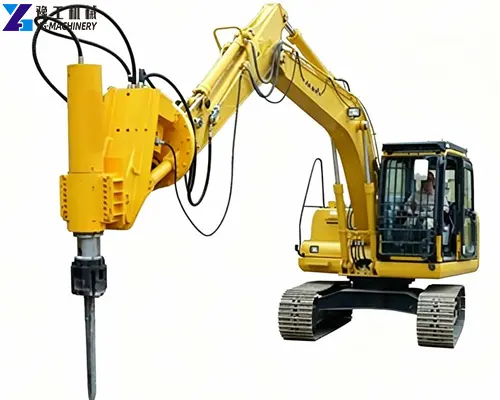
hydraulic rock splitting machine for excavator
excavator rock splitting attachment
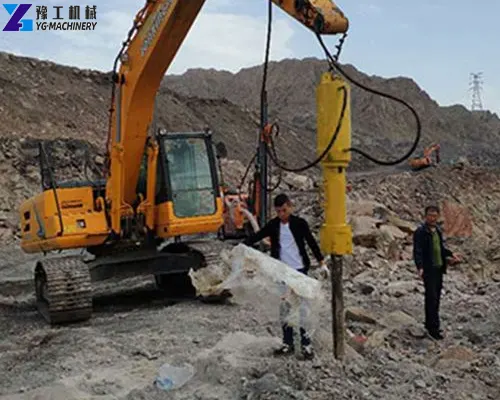
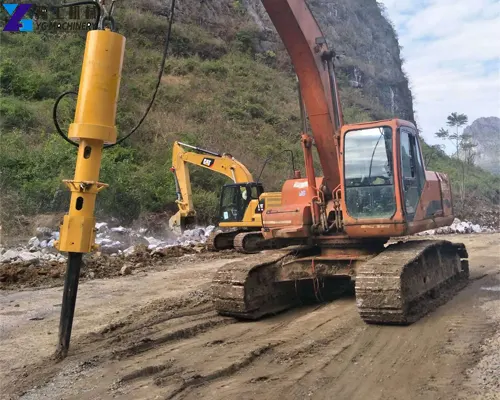
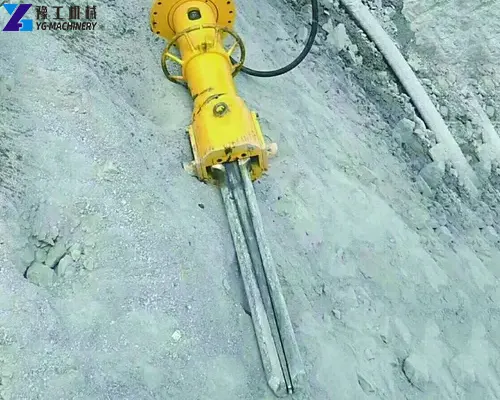
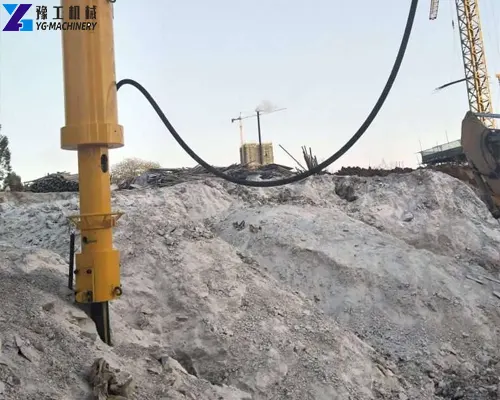
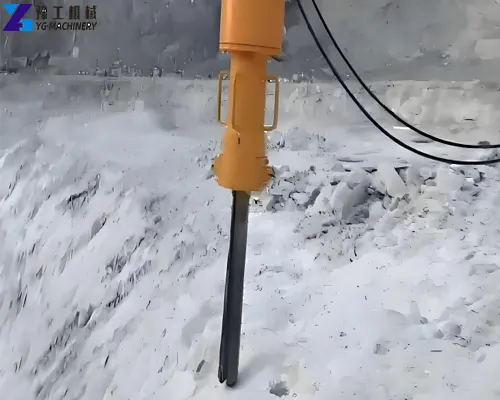
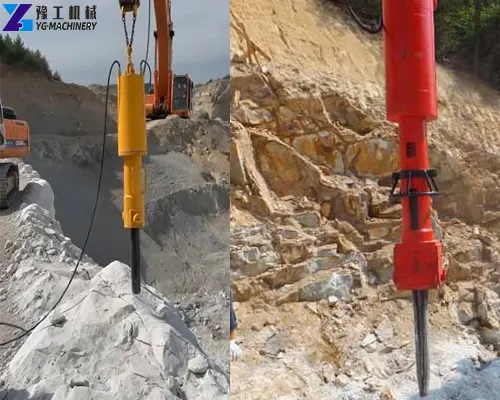
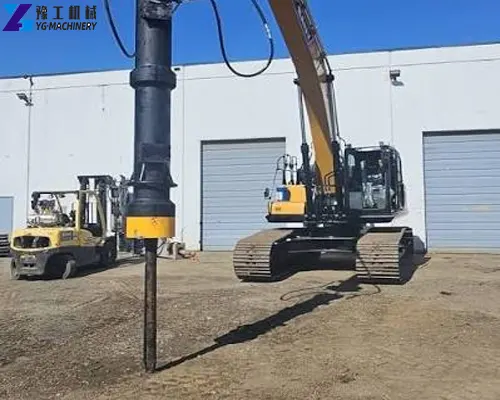
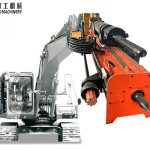
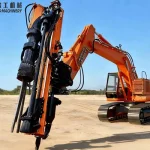
Many construction and mining jobs face strict explosion bans. Blasting is forbidden near residential zones, pipelines, roads, and existing buildings, while traditional hydraulic breakers create heavy noise, vibration, and high wear costs. YG excavator-mounted hydraulic rock splitter offers a low-vibration, controlled rock-breaking solution. YG Machinery supplies excavator-mounted splitting equipment for assessment with carriers of 20 tonnes and above. We match the configuration to your rock, drilling equipment, excavator, and project requirements—not simply the largest splitting-force figure. Compatible with mainstream excavator brands including Caterpillar, Komatsu, Hitachi, Volvo, Sany, and XCMG. If you are working on rock excavation where explosives cannot be used, this attachment is a reliable alternative for your site. Need drilling and splitting in one attachment? We can assess an integrated solution.
Send your excavator model, rock photographs, available hole diameter and depth, and estimated excavation quantity.
Application Scope of Carrier-Mounted Rock Splitters
Quarry stone harvesting: Split granite, basalt, and limestone for block stone collection.
Foundation pit rock excavation: Remove bedrock for building and basement construction.
Tunnel contour trimming: Smooth tunnel edges without disturbing surrounding rock stability.
River channel reef clearing: Break underwater and riverside rock for dredging and channel renovation.
Urban demolition: Split large concrete blocks and reinforced concrete in noise-restricted areas.
Mine overburden and waste rock removal: Non-blast rock excavation for small and medium mines.
Compatibility with Mainstream Excavator Brands
We can assess installations for CAT, Komatsu, Hitachi, Volvo, SANY, and XCMG excavators.
The 20-tonne-and-above guideline is only an initial screening point—not a universal-fit promise. Final selection requires:
Exact excavator model and boom arrangement.
Auxiliary flow and pressure.
Return circuit and hydraulic configuration.
Mounting dimensions.
Working radius and carrier capacity.
Attachment clearance and ground conditions.
Related Attachments for the Next Stage
If released material still needs impact reduction, assess a hydraulic breaker. It may serve a different stage of the excavation rather than compete directly with the splitter.
Where a project requires planned cutting or slotting, an excavator rock saw may be worth evaluating.
These tools are not a compulsory package. Recommend them only where the material, access, and construction method justify their use.
We provide a full lineup of rock splitting equipment to match different site conditions, not only excavator-mounted splitters.
Excavator-mounted hydraulic rock splitter: Best for large continuous rock work, moved quickly by the excavator, no extra power station needed. Ideal for open pits and large foundation projects.
Drill-split integrated machine: Combines drilling and splitting functions in one unit, great for sites with limited space and fewer machines.
Portable diesel/electric rock splitter: Separate hydraulic power station + splitting gun. Flexible for small, scattered work points, easy to carry into narrow areas.
Independent hydraulic rock splitter unit: For clients who already own excavators and only need spare splitting guns.
If you still need secondary crushing after splitting, we also supply supporting excavator attachments such as hydraulic breakers. You can view our hydraulic breaker product page for combined breaking workflows.
On-Site Operation Tips & Crew Safety Guidelines
Even though the splitter is safer than blasting, standardized operation still matters to protect your operators and extend equipment service life. Operators must stand away from the hole opening during splitting, as rock fragments may pop out unexpectedly. Check hydraulic hoses, seals, and wedge wear condition before starting each shift. Never adjust the hydraulic pressure beyond the rated value of YGM-S200 or YGM-S280. If the rock does not crack after one cycle, do not keep pressurizing repeatedly; stop and check the hole depth, hole spacing, and rock structure first. Training support is available for our buyers; we can share operation manuals and safety guidance videos for your field team.
Consumable Parts & Long-Term Maintenance Plan
The core wearing parts of the rock splitter are wedge groups, sealing kits, piston rings, and hydraulic hoses. We keep these spare parts in stock for fast delivery. Regular maintenance is simple: clean the wedge assembly after each job to remove rock dust and grit, replace seals when oil leakage appears, and lubricate sliding parts periodically. Many contractors and rental companies choose to buy spare consumable packs together with the main unit, so they can replace worn parts immediately on remote job sites without waiting for long shipping cycles. This reduces unexpected downtime and keeps your rock splitting schedule on track.
Frequently Asked Questions (FAQs) About Excavator-Mounted Hydraulic Rock Splitters
Q1: Does this splitter fit my excavator?
A1: It fits excavators of 20 tons and above. We support Caterpillar, Komatsu, Hitachi, Volvo, Sany, XCMG, and more. We will check your excavator’s hydraulic parameters before order confirmation.
Q2: Do I need to drill holes first?
A2: Yes. Pre-drilling is required before inserting the splitter gun. The hole diameter and depth must follow the spec table for stable splitting.
Q3: Which one is better: YGM-S200 or YGM-S280?
A3: YGM-S200 is for medium rock and compact hole layout. YGM-S280, with higher splitting force, works for hard rock and larger block splitting.
Q4: Can I buy a portable splitter instead of the excavator-mounted version?
A4: Yes. We have diesel and electric portable rock splitters with separate power packs for small jobs.
Q5: What spare parts are available?
A5: We supply wedge sets, sealing kits, hydraulic hoses, and replacement pistons for both models.
Q6: Can it work with a hydraulic breaker on the same site?
A6: Absolutely. Many clients use the splitter to crack large rock first, then use a hydraulic breaker to reduce blocks into smaller sizes.