Top, Professional and Reliable Manufacturer of Various Machinery – YG Machinery
Automatic Tunnel Kiln
automatic tunnel kiln manufacturer
automatic tunnel kiln for bricks
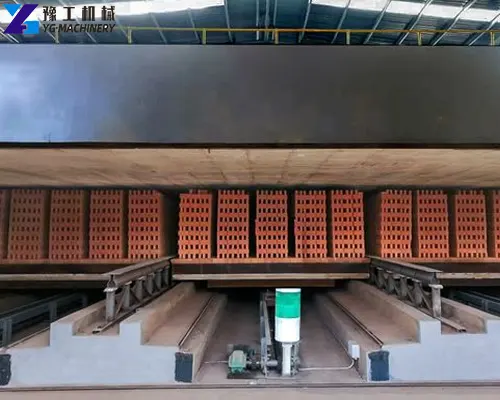
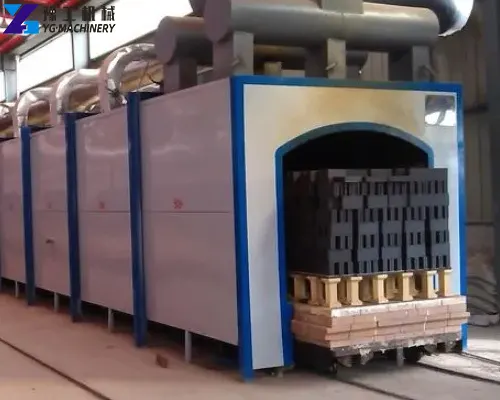
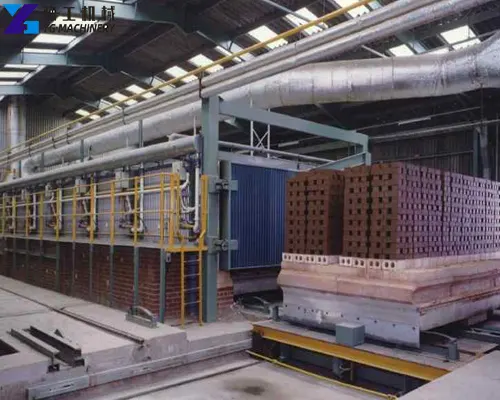
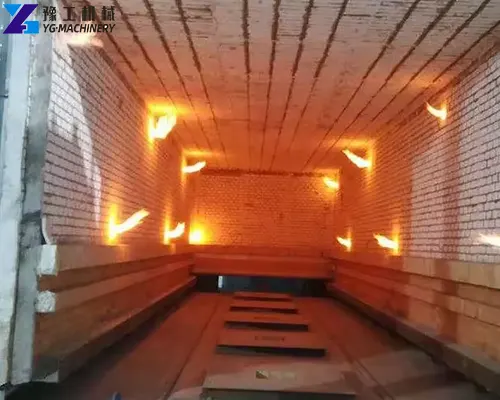
An automatic tunnel kiln for industrial firing is a continuous furnace that transports products on kiln cars through preheating, firing, and cooling zones in a single uninterrupted process. Unlike batch kilns that must be loaded, fired, cooled, and unloaded in separate cycles, the tunnel kiln operates continuously—reducing downtime and increasing production capacity.
The term “tunnel kiln” refers to a continuous firing furnace constructed on-site, where kiln cars carry products through the kiln chamber. These kilns are widely used in heavy clay industries, including brick manufacturing, ceramic tile production, sanitary ware, and refractory processing.
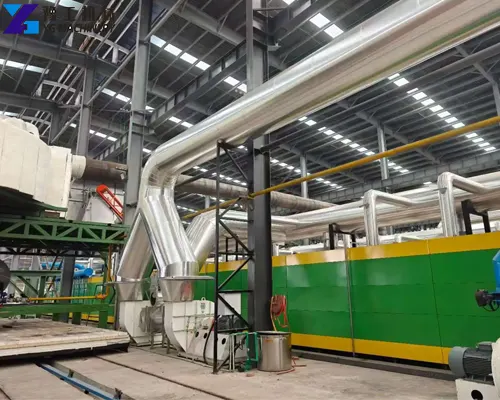
YG Machinery supplies automatic tunnel kilns for building materials such as hollow bricks, solid bricks, perforated bricks, and facing bricks, as well as for tiles, sanitary ware, and refractories. The system supports multiple fuel types—natural gas, coal, oil, and biomass—with fully automatic combustion control and PLC/HMI operation.
The Problems Brick Plants Face Before Upgrading
Manual operation is complex and people-dependent. Batch firing relies on experienced firemen reading the kiln by eye. When skilled staff retire or leave, firing quality drops, and labor costs keep rising every year.
Batch kilns cap your capacity. Each cycle means loading, firing, cooling, unloading, and reheating — the kiln sits idle for large parts of every day, and output cannot keep up with steady order books.
Fuel is wasted on every cycle. Reheating a cold kiln structure and cooling it back down sends heat up the chimney instead of into the product. Poor insulation and uncontrolled combustion air make the waste worse.
Temperature is uneven. Hot spots over-fire bricks while cold spots leave them under-fired, so strength, color, and dimensional consistency vary across the same kiln load.
Bricks crack. Fast, uncontrolled heating and cooling — especially in the critical preheating and cooling stages — cause thermal shock, internal stress, and visible cracking in green bricks.
Yield is unpredictable. Rejection rates swing from shift to shift, making planning, pricing, and customer promises difficult.
How the Automatic Tunnel Kiln Solves These Problems
Continuous operation. Once started, the kiln runs without interruption. This eliminates the downtime associated with batch kiln loading and unloading, enabling consistent production around the clock.
Precise temperature control. PLC and PID control systems automatically regulate each zone, minimizing temperature differences across the kiln and ensuring uniform firing conditions for every brick. Combined with an m-value control system to manage excess air, this approach can further improve temperature stability and fuel efficiency.
Automatic kiln car handling. Hydraulic pushers move the train of cars through the kiln at a programmed speed, allowing production adjustments for different product sizes without stopping the kiln.
Fuel flexibility. The kiln can be configured to operate on natural gas, coal, furnace oil, or biomass gas, depending on local availability and cost.
Energy recovery. Heat from the cooling zone can be recovered and redirected to the preheating zone, reducing fuel consumption.
Reduced labor requirements. Automation reduces the need for manual intervention in temperature control, car movement, and fuel feeding—lowering labor costs and minimizing human error.
Workflow: From Green Brick to Finished Product
The tunnel kiln process follows a continuous flow:
Green brick loading. Green bricks (formed and air-dried) are loaded onto kiln cars. The stacking pattern must ensure adequate channels for hot air circulation; research indicates that the arrangement of bricks and the gaps between them directly affect heat distribution.
Drying. The kiln cars enter the drying zone, where waste heat from the cooling zone is used to remove residual moisture from the bricks.
Preheating. As the cars move forward, they pass through the preheating zone, where temperature is gradually increased to prepare the bricks for firing without causing thermal shock or cracking.
Firing. The bricks reach the firing zone, where the temperature is held at the required level for the specified duration. For clay bricks, this typically ranges from 800°C to 1,200°C; for advanced ceramics and refractories, up to 1,850°C. Gas flow direction can be adjusted to ensure even heat distribution—a design feature employed in certain continuous kiln configurations.
Cooling. After firing, the bricks pass through a controlled cooling zone. Heat from this zone can be recovered and redirected to the drying or preheating zones to reduce overall fuel consumption.
Unloading. The cooled bricks are unloaded from the kiln cars at the exit end, ready for sorting, packaging, or further processing.
Applications of Tunnel Kilns (Suitable for Different Finished Products)
Frequently Asked Questions About YG Automatic Tunnel Kiln for Industrial
Q1: How is the kiln’s capacity determined?
A1: Capacity depends on brick type and size, setting density per car, car travel speed, and the firing curve your product needs. The reference line — a 5.8 m wide, 90–120 m long kiln — produces around 300,000 standard bricks per day. Tell us your target daily output and brick dimensions, and we will size the kiln and car system accordingly.
Q2: Should I choose coal or natural gas?
A2: It depends on local fuel prices and availability, emissions regulations, and your product requirements. Natural gas burns cleanly with precise automatic control; coal can offer lower fuel cost in regions where it is abundant and permitted. Dual-fuel burner arrangements are also possible. We design the firing system around the fuel you will actually use.
Q3: Can the kiln be customized?
A3: Yes. Every line is engineered to order: kiln length and width, kiln car deck size, fuel and burner system, automation level (from car control up to automatic setting/dehacking), refractory lining, and temperature curve are all matched to your products and plant.
Q4: How large a factory building do I need?
A4: The building must accommodate the kiln itself (typically 90–120 m long for the reference line), the dryer, car return tracks, setting and unloading areas, and raw-material and finished-brick storage. Once you share your workshop dimensions, our engineers provide a plant layout drawing showing how the complete line fits.
Q5: How does the kiln reduce energy consumption?
A5: Three ways: continuous firing removes the heat-up/cool-down waste of batch kilns; zoned burners with PLC-controlled combustion deliver heat where and when it is needed; and waste-heat recovery ducts hot cooling-zone air to the dryer and preheating zone. We do not quote fixed savings percentages — results depend on your product, fuel, and baseline kiln.
Q6: How are installation and after-sales arranged?
A6: We supply installation guidance and drawings, commission the line with trial production, and train your operators. After commissioning, support continues online and — when needed — on site, with spare parts available for the burner, control, and car systems. Warranty and service terms are written into the supply contract.
Q7: How do I estimate the investment for a complete line?
A7: Investment varies with capacity, kiln size, fuel system, automation level, and local installation work — there is no single price for a custom-engineered line. Submit your brick type, brick size, target daily output, raw material, planned fuel, and workshop dimensions, and we will prepare a tailored technical proposal and quotation.
Get a Custom Tunnel Kiln Proposal and Quote
Send us the details below, and our engineering team will size the kiln, dryer, and car system for your plant:
Brick type (hollow/solid/perforated/facing/ceramic/refractory)
Brick size (mm)
Target daily output (pieces/day or tons/day)
Raw material (clay, shale, coal gangue, fly ash, etc.)
Planned fuel (natural gas/coal / dual fuel)
Workshop dimensions (length × width × height, available site plan if possible)